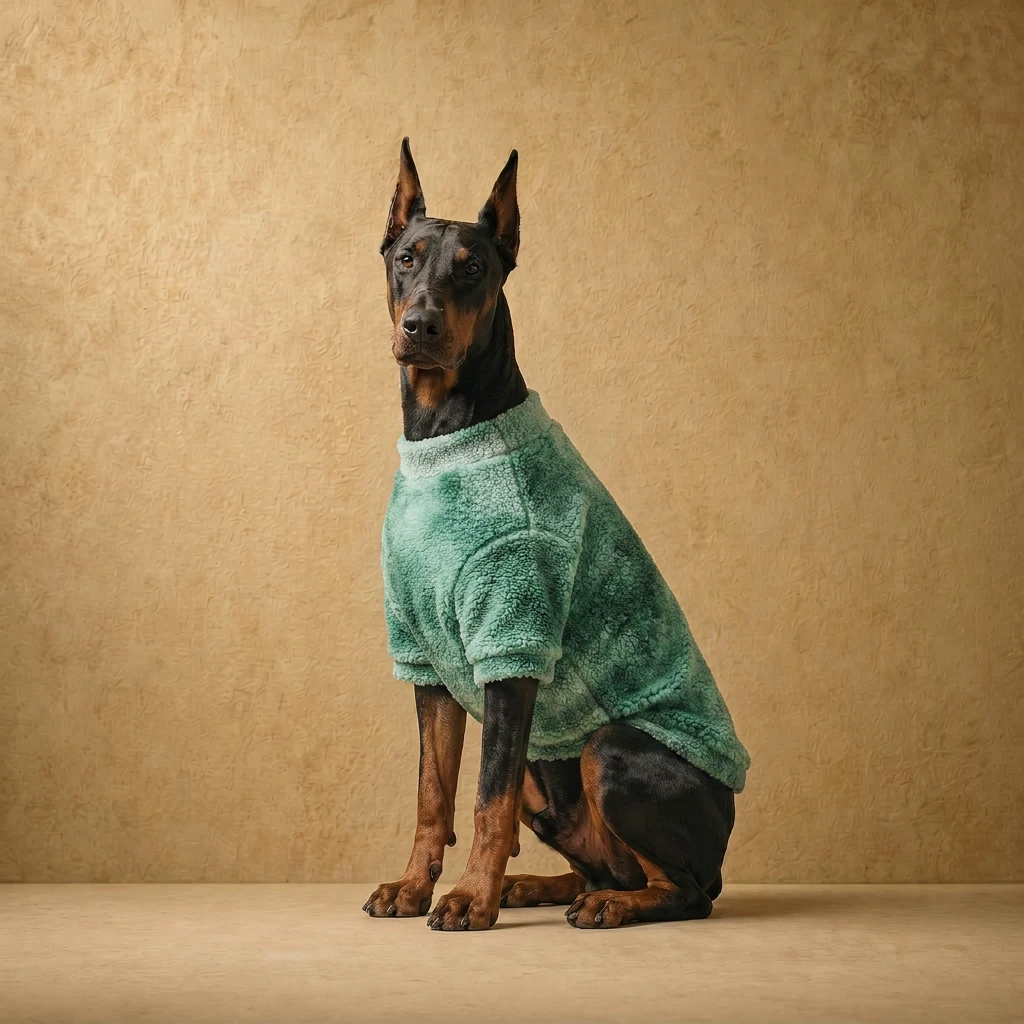
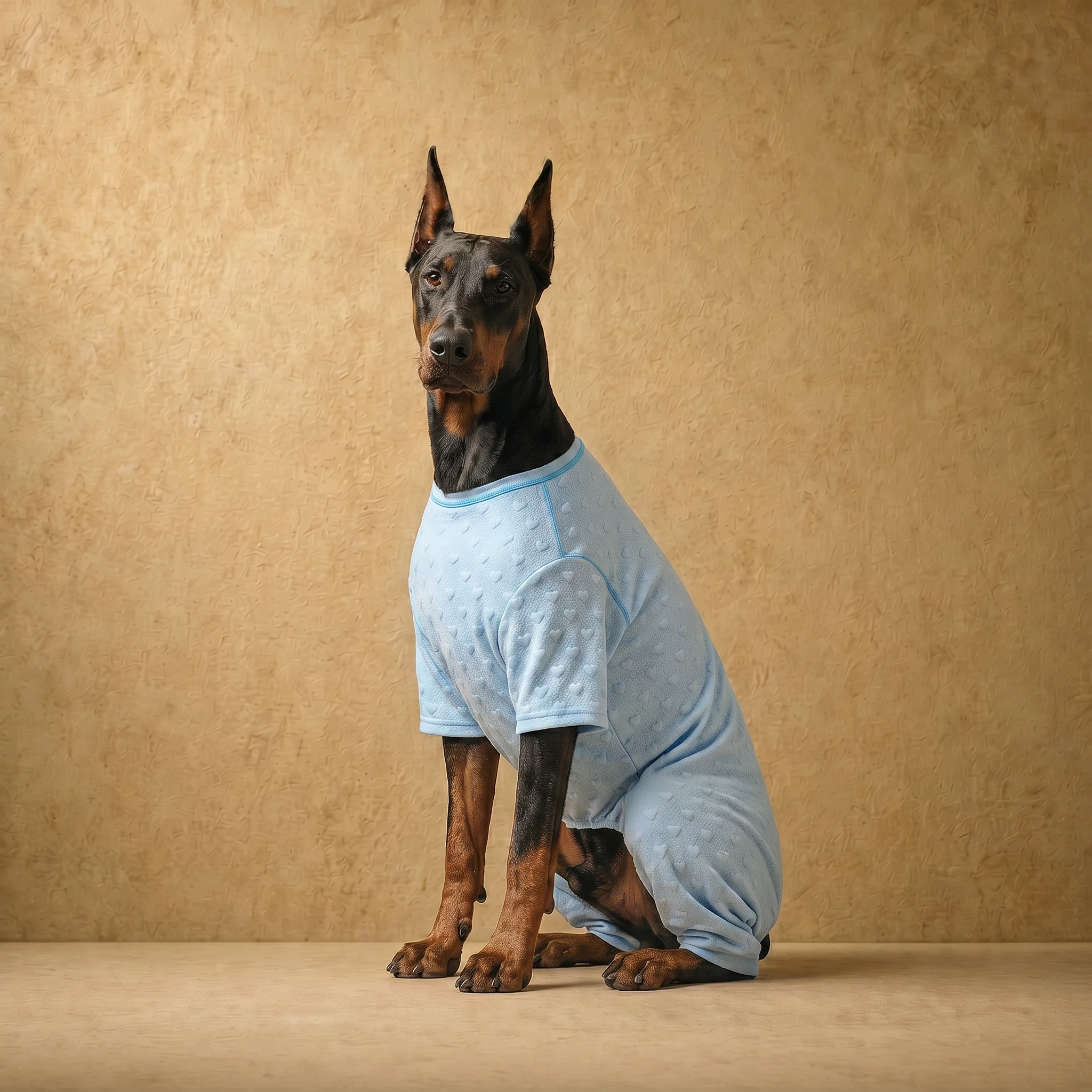
When you picture a traditional hunting companion, you likely envision a floppy-eared hound howling on a trail or a water-loving Labrador Retriever splashing through a frosty marsh. The sleek, muscular, and intensely alert Doberman Pinscher rarely makes the traditional list of gun dogs. Known worldwide as elite protectors and fiercely loyal family companions, Dobermans are more commonly associated with police work, personal protection, and competitive obedience than with upland game or deer tracking.
However, as modern dog owners continue to explore versatile outdoor activities with their canine companions, the concept of a doberman hunting dog is steadily gaining traction. With their incredible athleticism, high intelligence, and strong prey drive, these dogs possess a unique combination of traits that can absolutely translate to fieldwork.
If you are an avid outdoorsman or simply an active owner wondering about your dog's untapped potential, you might be asking yourself: are Dobermans hunting dogs? In this comprehensive guide, we will explore the realities of taking a Doberman into the field, the types of hunting they are best suited for, and the unique challenges you might face when transforming a world-class guardian into a reliable hunting partner.
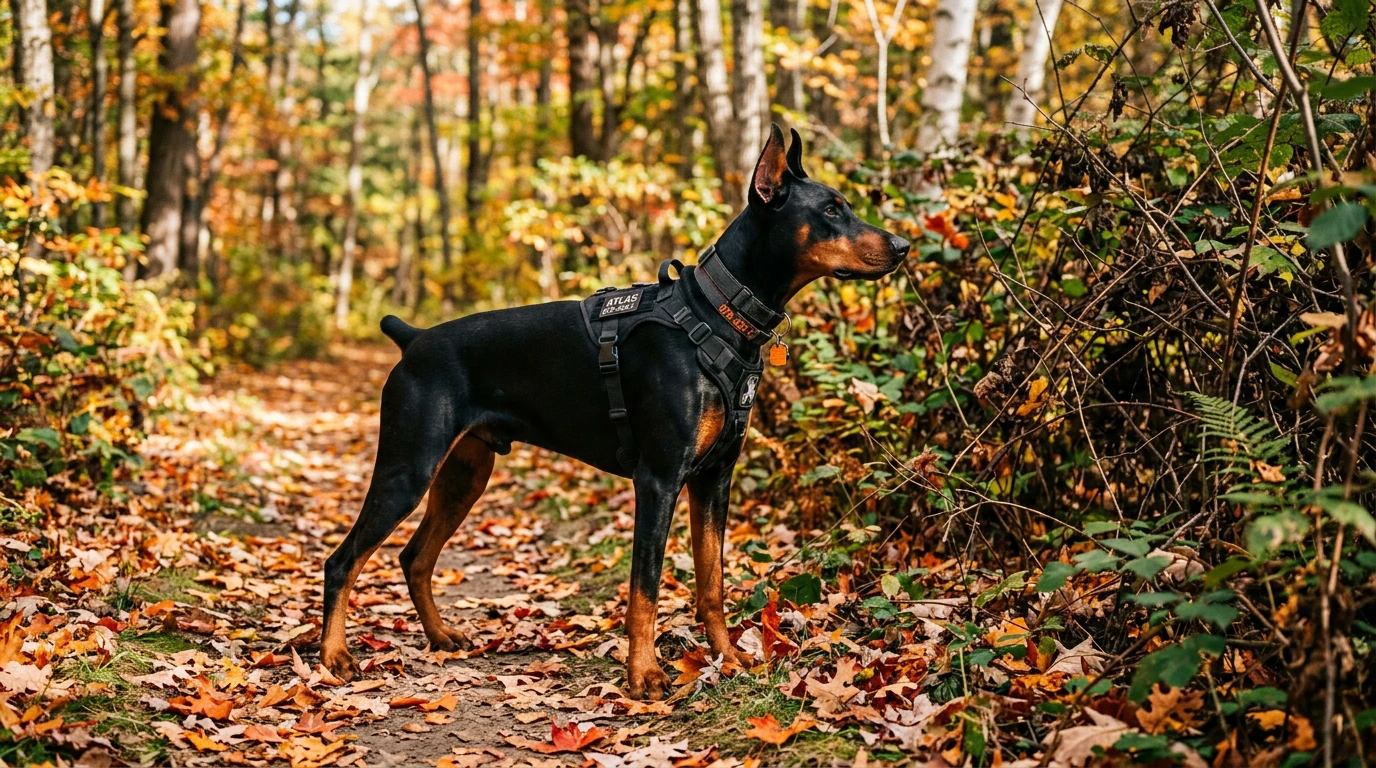
This narrower guide makes more sense alongside the broader Doberman Pinscher Temperament, Care, and Ownership Guide, which frames how this topic fits into the bigger ownership picture.
Are Dobermans Hunting Dogs? A Look at Their Origins
To accurately answer the question—are Dobermans hunting dogs?—we first have to look back at the breed's origins. In the late 19th century, a German tax collector named Karl Friedrich Louis Dobermann set out to create the ultimate protection dog to accompany him on his dangerous rounds. He needed a dog that was intimidating, fiercely loyal, highly trainable, and fearless. To achieve this, he mixed several breeds, likely including the Rottweiler, German Pinscher, Black and Tan Terrier, and the Greyhound.
Noticeably absent from this foundation are the traditional sporting spaniels, retrievers, or specialized scenthounds. Because they were bred specifically for human protection and intimidation, Dobermans do not have the innate, centuries-old genetic programming to point at birds, soft-mouth a downed duck, or bay at a treed raccoon.
However, just because they weren't bred for the hunt doesn't mean they can't hunt. The genetic contributions of the Greyhound gave them immense speed and a high visual prey drive, while terrier blood provided tenacity and a willingness to dispatch vermin. When you combine these latent instincts with the Doberman's legendary intelligence and desire to please their handler, you get a highly capable athlete that can be cross-trained for a variety of field tasks. While a hunting doberman may not rival an English Pointer in a quail field, they can be remarkably effective in specialized roles.
Traits That Make Doberman Pinscher Hunting Possible
Taking a dog into the woods requires a specific set of physical and mental characteristics. The Doberman brings a surprising number of advantages to the table:
Exceptional Athleticism and Stamina
Dobermans are built like endurance athletes. Their deep chests accommodate large lungs, and their muscular, lean frames allow them to cover ground efficiently without tiring quickly. In a field scenario, a well-conditioned Doberman can easily keep pace with you all day, navigating rough terrain with agility and grace.
High Prey Drive
Most Dobermans have an incredibly strong prey drive. If you've ever seen your Doberman spot a squirrel across the yard, you know how laser-focused and explosive they can be. In a hunting context, this prey drive can be channeled and refined. Instead of chasing arbitrarily, the dog learns that hunting is a structured game played alongside their human partner.
Trainability and Handler Focus
Unlike some independent hound breeds that might catch a scent and disappear into the next county, Dobermans are "Velcro dogs." They inherently want to be near their handlers and thrive on receiving direction. This intense handler focus makes them highly responsive to commands in the field, allowing for excellent recall and off-leash control.
Before taking your dog into challenging outdoor environments, it is vital to have a solid foundation in obedience and a deep understanding of their natural instincts. For a comprehensive overview of how to manage their high energy, intelligence, and loyalty, check out our Doberman Pinscher Temperament Care and Ownership Guide. Building this foundation at home is the first step toward creating a reliable field companion.
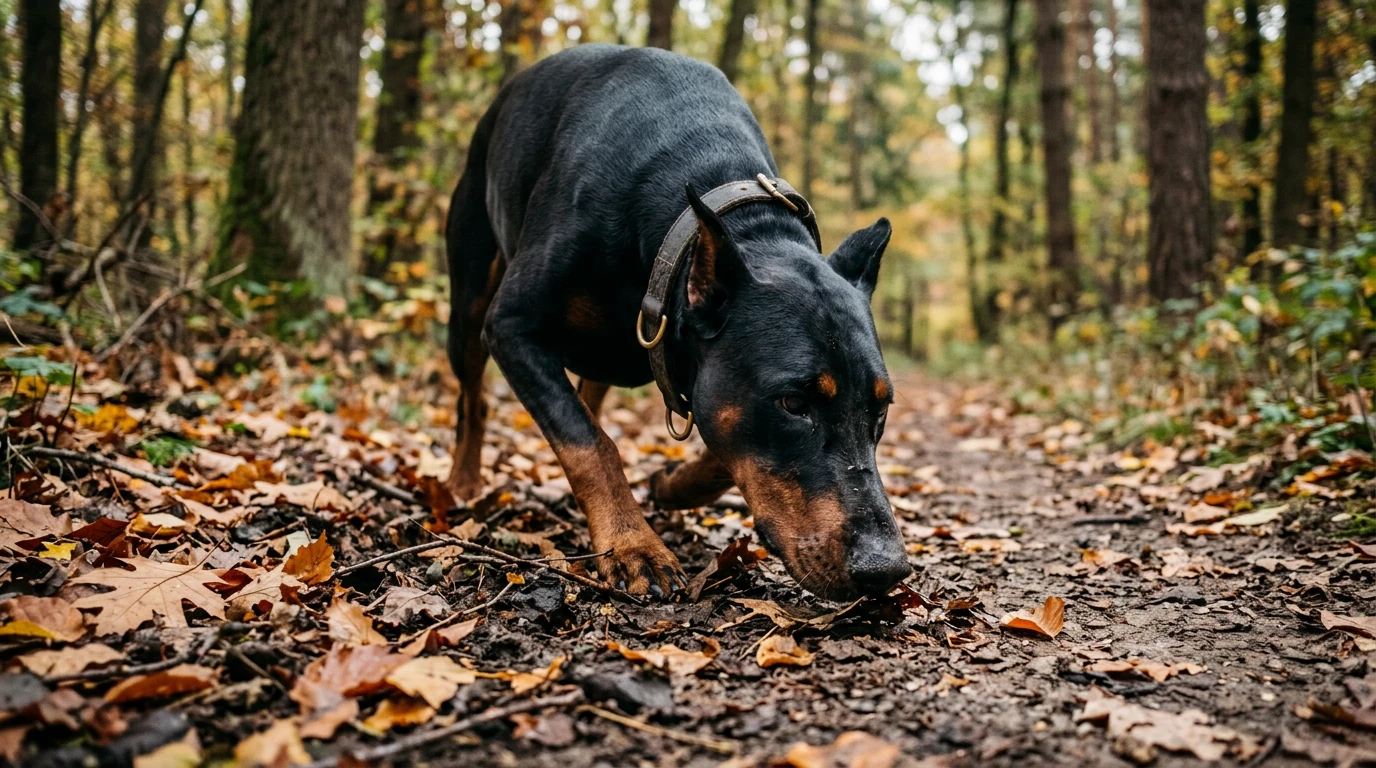
Ideal Field Roles for a Hunting Doberman
Because they do not fit neatly into the "retriever" or "pointer" categories, a doberman pinscher hunting strategy requires you to play to the breed's specific strengths. Here are the most successful hunting roles for a Doberman:
Blood Tracking and Big Game Recovery
This is perhaps the area where Dobermans excel the most in the modern hunting world. When a hunter shoots a deer, elk, or wild boar, the animal does not always drop immediately. Hunters rely on blood trailing to recover the game. Dobermans have excellent noses and are incredibly methodical when given a job to do. With proper scent-tracking training, a Doberman can follow a faint blood trail over hundreds of yards of dense brush, leading the hunter directly to the recovered game. Their protective nature also means they will confidently claim and guard the downed animal until you arrive.
Upland Flushing
While a Doberman won't naturally "point" and hold perfectly still when they smell a pheasant or quail, their speed and energy make them excellent flushing dogs. A flushing dog's job is to quarter back and forth in front of the hunter, staying within gun range, and vigorously dive into thick brush to force hiding birds into the air. A Doberman's terrier tenacity makes them quite willing to bust through heavy cover to kick up game.
Varmint and Pest Control
On farms and rural properties, Dobermans are exceptional at keeping the local rodent, raccoon, and feral pig populations in check. Their speed, agility, and powerful bite make them lethal against fast-moving ground pests. In some regions, hunters even use specially trained Dobermans to help corner or bay wild boar, though this requires careful training and protective gear to keep the dog safe from tusks.
Training Challenges for the Field
While the potential is clearly there, developing a doberman hunting dog comes with specific challenges that handlers must be prepared to address. Traditional hunting breeds come with "pre-installed software" for the field; a Doberman requires you to manually program their hunting behaviors.
Gun Desensitization
Dobermans are highly alert and can be sensitive to loud, unexpected noises. Gun shyness is a very real risk if they are not introduced to firearms properly. You cannot simply take a Doberman to a shooting range and expect them to be okay. Gun conditioning must happen gradually over weeks or months, starting with soft noises (like a cap gun or clapping boards) from a great distance while the dog is distracted by something positive, like food or a favorite toy. The noise should slowly become louder and closer, always associated with a positive reward, until the sound of a shotgun signifies excitement rather than fear.
Managing the Chase Instinct
A Doberman's high prey drive is a double-edged sword. While it motivates them to find game, it can also tempt them to chase a flushing bird or fleeing rabbit over the horizon. Steadiness training—teaching the dog to sit or stop immediately upon the flush or the shot—is critical. You do not want your dog chasing a bird into the line of fire.
Soft Mouth vs. Hard Mouth
Retrievers have been bred for centuries to have a "soft mouth," meaning they can carry a downed bird without damaging the meat. Dobermans, with their guard and terrier lineage, naturally have a "hard mouth." If you intend to use your Doberman for retrieving, you will have to spend significant time on forced fetch and hold training to teach them not to bite down or chew on the game.
The Physical Limitations: Weather and Terrain
Perhaps the biggest hurdle to Doberman pinscher hunting is not their temperament, but their physical anatomy. Unlike a Labrador with a thick, oily, water-resistant double coat, or a Wirehaired Pointing Griffon with dense, wiry armor, the Doberman has a single, short coat with virtually no undercoat.
Cold Weather Sensitivity
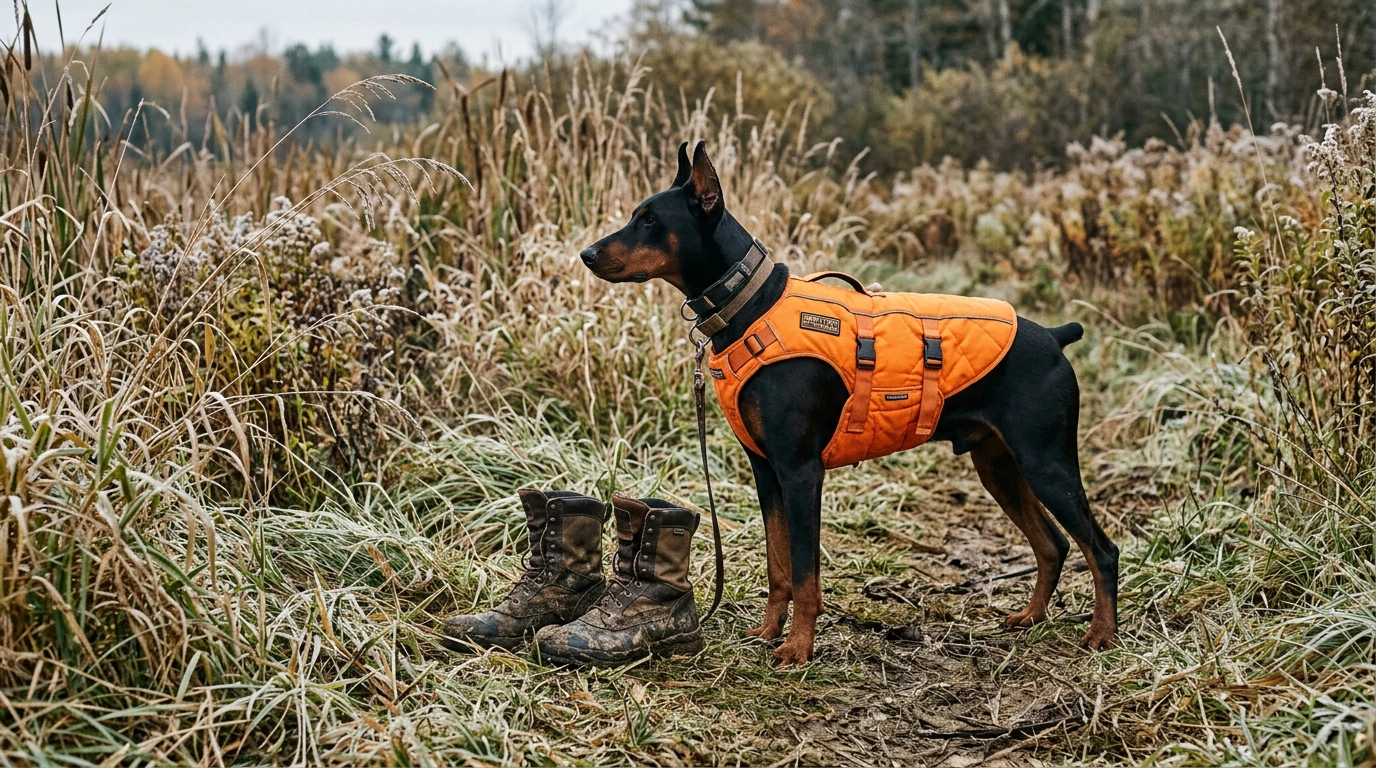
Dobermans chill very quickly in cold weather, rain, and snow. They are not suited for sitting still in a freezing duck blind for hours, nor are they built for swimming in icy water to retrieve waterfowl. If you plan to hunt with your Doberman in the late fall or winter, you must invest in high-quality, insulated, and water-resistant dog field vests to regulate their body temperature.
Brush and Briar Vulnerability
That same thin coat offers zero protection against thorny briars, sharp branches, and barbed wire. A Doberman plunging into a thicket of blackberries to flush a rabbit will likely come out with a chest and legs full of painful scratches. Outfitting your dog in a durable chest protector or skid plate is an absolute necessity to prevent field injuries and keep them working comfortably.
Pros and Cons of a Hunting Doberman
To help summarize what to expect, here is a breakdown of the advantages and disadvantages of taking this magnificent breed into the field:
| Feature | Advantage in the Field | Challenge in the Field |
|---|---|---|
| Athleticism | Incredible speed, agility, and all-day stamina. | High energy requires rigorous physical conditioning. |
| Intelligence | Learns complex tasks, tracks, and boundaries quickly. | Can become bored or stubborn if training isn't engaging. |
| Prey Drive | Highly motivated to locate, track, and pursue game. | Prone to "hard mouth" or chasing game out of gun range. |
| Coat/Build | Sleek coat doesn't pick up burrs, mud, or mat easily. | Extreme vulnerability to cold weather, water, and thorns. |
| Handler Focus | Naturally stays close; excellent off-leash recall. | Requires constant direction; not an independent hunter. |
Conclusion
So, are Dobermans hunting dogs? In the traditional sense, no. They will never replace the specialized sporting breeds that have dominated the hunting world for centuries. However, if you are an owner who loves to spend time outdoors and wants to give your highly intelligent, high-energy dog a rewarding job, a hunting doberman is an entirely achievable goal.
With patience, specialized training, and a deep respect for their physical limitations in harsh weather, a Doberman can become a phenomenal blood tracker, a tenacious flusher, and a fearless varmint hunter. More importantly, the time spent training and working together in the woods will forge an unbreakable bond between you and your Doberman, allowing this incredibly versatile breed to do what it does best: work side-by-side with its handler.