Do Dobermans Bark a Lot? What Usually Triggers the Noise
With their sleek silhouettes, athletic builds, and naturally alert postures, Doberman Pinschers have long been celebrated as one of the canine world's premier guardian breeds. Because of their reputation as formidable protectors, prospective owners often wonder about their vocal habits. Specifically, they find themselves asking: do dobermans bark a lot?
If you are considering bringing one of these fiercely loyal dogs into your home, understanding how and why they communicate is crucial. The short answer is that Dobermans are not inherently "yappy" nuisance barkers. However, they are highly communicative, fiercely protective, and deeply attached to their families. When a Doberman barks, they are almost always trying to tell you something specific.
In this guide, we will explore the nuances of Doberman Pinscher barking, unpack the most common triggers behind the noise, and provide actionable management strategies to help you and your dog live together peacefully.

This narrower guide makes more sense alongside the broader Doberman Pinscher Temperament, Care, and Ownership Guide, which frames how this topic fits into the bigger ownership picture.
The Baseline: Are Dobermans Considered Heavy Barkers?
To understand Doberman barking, it helps to look back at the breed’s origins. Developed in late 19th-century Germany by a tax collector named Louis Dobermann, the breed was created to be an intimidating, loyal, and highly responsive personal protection dog. A good protection dog does not bark mindlessly at the wind; they bark to alert their handler to a genuine threat and to warn the threat to stay away.
Because of this selective breeding, the modern Doberman is generally a moderate barker. They do not typically bark just to hear their own voices, a trait sometimes seen in certain terrier or hound breeds. Instead, they operate on a "cause and effect" basis. If everything in their environment is stable, calm, and familiar, a well-exercised Doberman will likely be quiet and relaxed.
However, "moderate barker" does not mean "silent." Dobermans are incredibly vigilant. They possess a high level of environmental awareness, meaning they notice the delivery driver pulling up three houses down, the stray cat walking along the back fence, and the subtle change in a neighbor's routine. How they react to these stimuli depends heavily on their training, socialization, and daily enrichment.
The Anatomy of Doberman Pinscher Barking
When a Doberman does decide to bark, you—and everyone else in the vicinity—will know it. Their bark is famously loud, deep, and resonant, echoing from their large, powerful chests. The sheer volume of a Doberman dog barking can be startling, which is exactly how it was designed to function.
Interestingly, Dobermans have a tiered system of vocalizations before they reach a full-blown alarm bark:
- The "Boof": Often made with a closed mouth, this is a low, muffled chest sound. It usually means, "I heard something, and I'm investigating."
- The Warning Bark: A sharp, single, or double bark directed at a specific trigger. This is their way of saying, "I see you, and you should know I am here."
- The Alarm Bark: Continuous, deep, and booming. This is reserved for when they believe there is an active threat or an unauthorized person approaching their territory.
- The "Dobie Whine": While not a bark, Dobermans are notorious whiners. Because they are so emotionally connected to their owners, they often whine, groan, or "grumble" to express impatience, excitement, or a desire for affection.
Common Triggers: Why Do Dobermans Bark?
If you find yourself dealing with excessive Doberman barking, the first step is to identify the trigger. Because they are purpose-driven dogs, identifying the why will directly inform the how of stopping it.
1. Stranger Danger and Alert Barking
Territoriality is hardwired into the Doberman’s DNA. The most common reason for Doberman pinscher barking is the perceived intrusion of their territory. Mail carriers, delivery drivers, neighbors walking their dogs, or even unfamiliar cars parking near the house can trigger an alert bark. To a Doberman, they are simply doing their job: letting you know that the perimeter has been breached.
2. Boredom and Under-Stimulation
Dobermans are ranked among the top five smartest dog breeds in the world, and they have the physical energy of an elite athlete. If they are left alone in a backyard all day or do not receive adequate mental and physical exercise, they will become bored. A bored working dog will often invent a job for themselves, and unfortunately, that job is often barking at every passing car, leaf, or shadow. Boredom-induced barking is often repetitive, monotonous, and continuous.
3. Separation Anxiety
Often affectionately referred to as "Velcro dogs," Dobermans form incredibly intense bonds with their human families. They want to be wherever you are, ideally leaning their heavy bodies right against your leg. When left alone, a Doberman prone to separation anxiety may bark, howl, or whine excessively out of distress. This type of barking is usually accompanied by other signs of anxiety, such as pacing, drooling, or destructive chewing near exit points.
4. Playfulness and Demand Barking
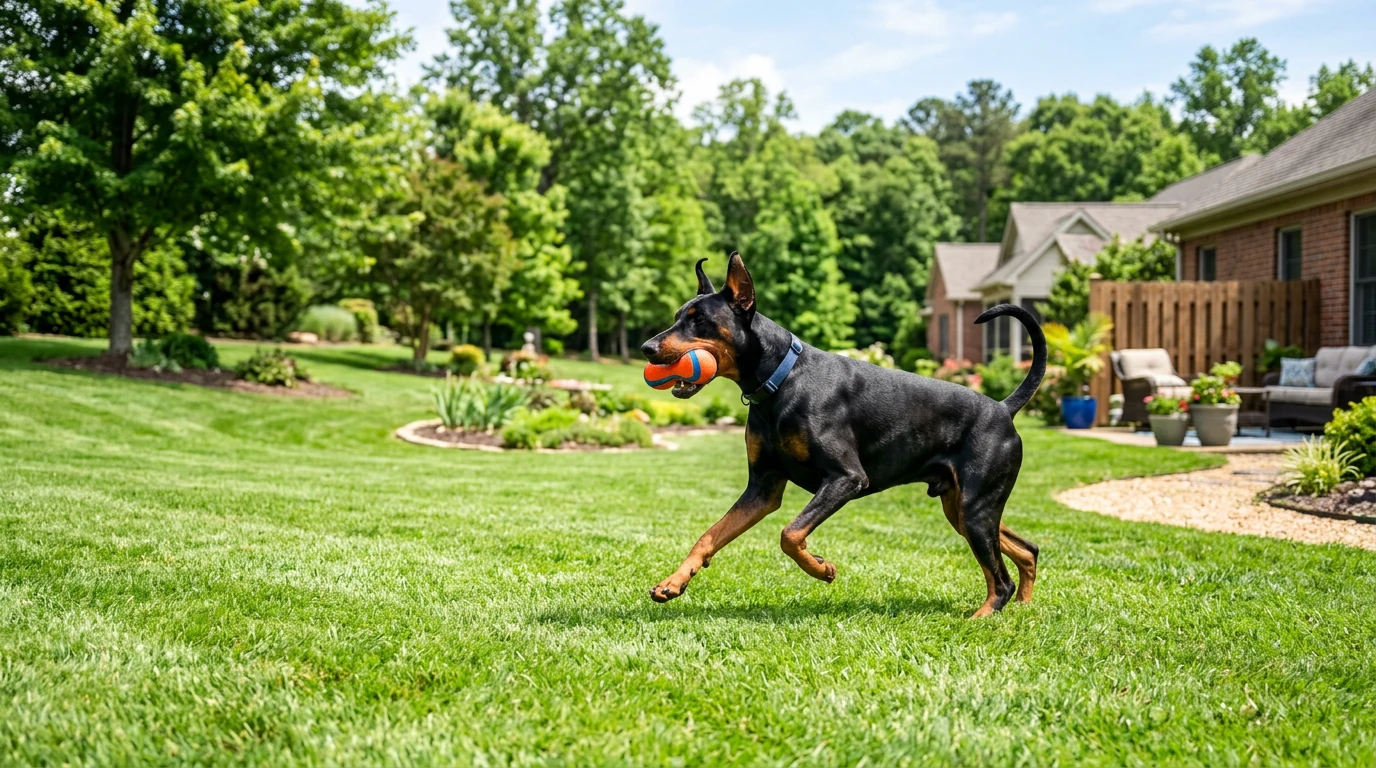
Not all barking is rooted in guarding or distress. Dobermans can be incredibly goofy and playful with their families. During a high-energy game of fetch or tug-of-war, they may bark out of sheer excitement. Alternatively, they may engage in "demand barking"—staring directly at you and barking sharply to demand their dinner, a walk, or access to the couch.
Connecting Barking to Their Broader Temperament
To effectively manage your dog's vocal habits, you have to understand the whole dog. Their tendency to bark at the window is intrinsically linked to their loyalty, their intelligence, and their need for a strong, confident leader.
If you only address the barking without addressing their need for security and structure, you will likely find yourself frustrated. For a deeper dive into their overall personality traits, daily care needs, and how to nurture a balanced, confident dog, explore our comprehensive Doberman Pinscher Temperament Care and Ownership Guide. Understanding their broader psychological profile is the key to decoding their daily behaviors.
Actionable Ways to Manage Doberman Dog Barking
If you are asking, "do doberman pinschers bark a lot?" because you are actively dealing with a noisy dog, there is good news. Because they are highly intelligent and eager to please, Dobermans respond exceptionally well to consistent training. Here are effective strategies to manage their barking.
The "Thank You" Technique for Alert Barking
Because a Doberman is barking to alert you to a perceived threat, yelling "Quiet!" often backfires. To the dog, your yelling sounds like you are barking right alongside them, validating their belief that there is a threat.
Instead, use the "acknowledge and dismiss" method:
- When your Doberman barks at the window, walk over to them calmly.
- Look out the window at what they are barking at.
- Turn to your dog and say calmly, "Thank you, I see it. That's enough."
- Call them away from the window and reward them with a high-value treat when they comply and stop barking.
This teaches the dog that they have done their job by alerting you, but that you—the leader—are taking over the situation and no further action is required from them.
Increase Mental and Physical Enrichment
A tired Doberman is a quiet Doberman. A simple walk around the block is rarely enough for this breed. They need vigorous physical exercise like running, hiking, or intense games of fetch.
Just as importantly, they need mental exhaustion. Incorporate puzzle toys, advanced obedience training, or scent work into their daily routine. When their brains and bodies are appropriately tired, they are far less likely to engage in nuisance barking out of boredom.

Teach the "Quiet" Command
Teaching a dedicated "Quiet" command gives you an "off switch" for the noise.
- Wait for your dog to bark.
- When they pause to take a breath, say "Quiet" in a firm, calm voice.
- Immediately reward them with a high-value treat while they are silent.
- Gradually extend the duration of silence required before handing over the treat. With consistency, your Doberman will learn that stopping the noise yields a better reward than continuing it.
Desensitization and Socialization
If your Doberman barks aggressively at every dog or person they see on walks, they need desensitization training. This involves exposing them to their triggers at a distance where they remain calm, and rewarding them for looking at the trigger without reacting. Over time, you can gradually decrease the distance. Because Dobermans are large and powerful, working with a professional positive-reinforcement trainer is highly recommended if their barking is rooted in fear or reactivity.
When to Seek Professional Help
While occasional barking is a normal part of canine communication, there are times when it warrants professional intervention. If your Doberman's barking suddenly increases in frequency, it could be a sign of an underlying medical issue, pain, or in older dogs, cognitive decline.
Additionally, if their barking is accompanied by genuine aggression—such as lunging, snapping, or uninhibited growling at guests—it is crucial to consult a certified animal behaviorist. Guarding breeds require precise, balanced training to ensure their protective instincts do not turn into a liability.
Conclusion: Appreciating the Doberman's Voice
So, do Dobermans bark a lot? Compared to hounds or toy breeds, no. But when they do bark, it is loud, purposeful, and demanding of your attention.
By understanding that Doberman pinscher barking is usually triggered by a desire to protect, a lack of stimulation, or a deep attachment to you, you can address the root cause rather than just treating the symptom. With proper exercise, proactive training, and strong leadership, you can easily teach your Doberman when it is appropriate to use their booming voice—and when it is time to enjoy a quiet, peaceful home.