The Noble Guardian: A Complete Doberman Pinscher Guide to Temperament, Care, and Ownership
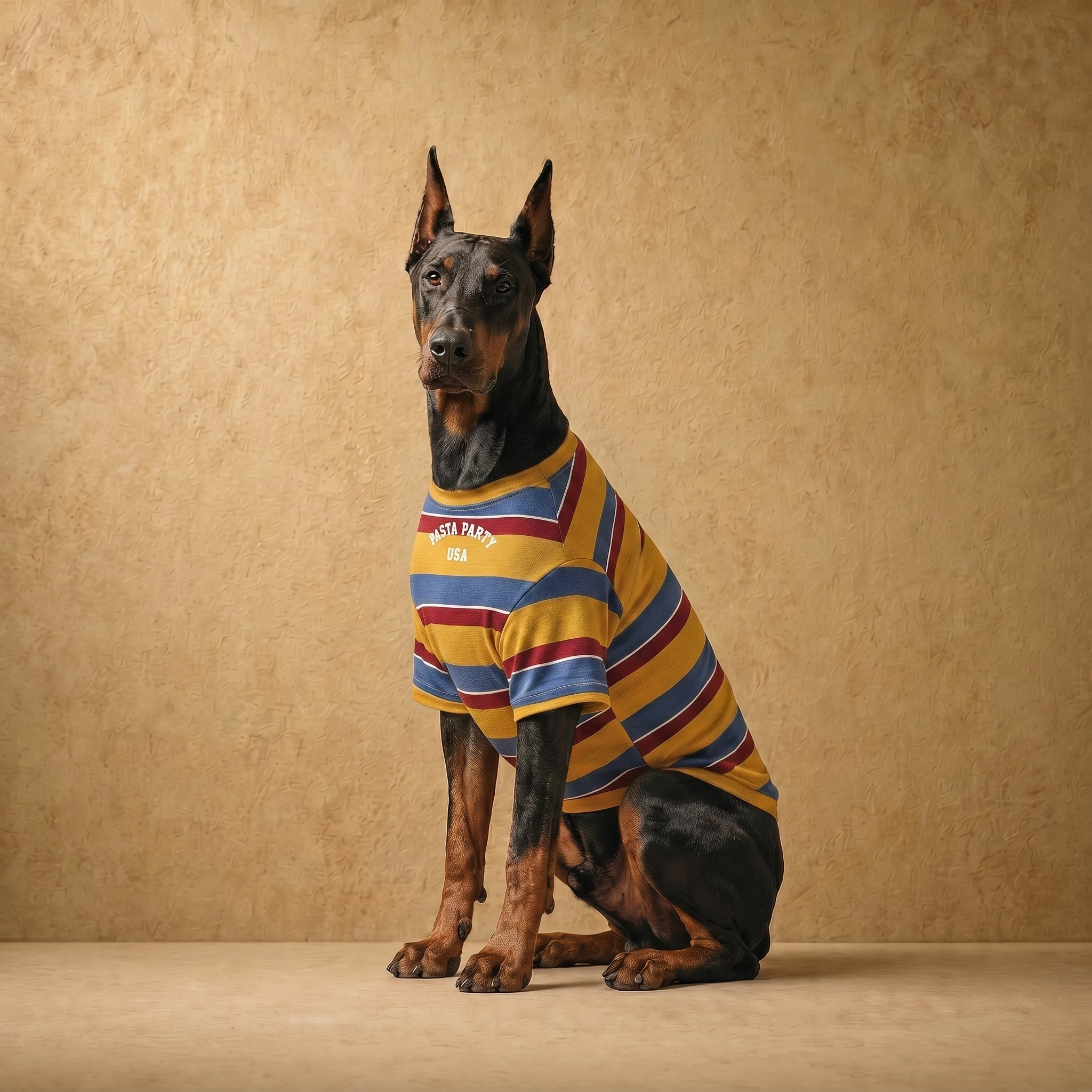
Few dog breeds command as much instant respect, admiration, and curiosity as the Doberman Pinscher. With their sleek, muscular silhouettes, chiseled features, and proud carriage, these dogs are the very definition of canine nobility. Yet, behind their imposing exterior lies a deeply affectionate, highly sensitive, and fiercely loyal companion.
Whether you are already a proud "Dobie" parent or are considering bringing one into your home, this complete doberman pinscher guide is designed to give you a thorough understanding of what it takes to happily coexist with this extraordinary breed. From history and temperament to daily care routines and training strategies, welcome to doberman pinscher 101.

Doberman Pinscher 101: History and Origins
To truly understand the modern Doberman Pinscher, we must look back to late 19th-century Germany. The breed owes its existence—and its name—to Karl Friedrich Louis Dobermann, a tax collector from the town of Apolda. Because tax collecting was a dangerous profession in those days, Dobermann sought to breed a versatile, intelligent, and imposing guard dog that could protect him during his rounds.
To achieve this, he crossed several breeds, likely including the early Rottweiler, the German Pinscher, the Great Dane, the Weimaraner, and the Greyhound. The result was a highly alert, fearless protector with unparalleled stamina and intelligence.
Over the decades, breeders refined the Doberman Pinscher to soften some of its sharper defensive edge, transforming it from a fierce guard dog into one of the world's premier working dogs and family companions. Today, they serve as search-and-rescue dogs, military K9s, service animals, and, most commonly, cherished family protectors.
Doberman Pinscher Temperament and Traits
When exploring all about doberman pinschers, the topic of temperament is often the most misunderstood. Popular culture has frequently cast the Doberman as a aggressive, hyper-alert watchdog. However, modern Dobermans are far more nuanced, loving, and gentle than their cinematic stereotypes suggest.
The "Velcro" Dog
One of the most defining characteristics of the Doberman Pinscher is their intense attachment to their human family. Dobermans are affectionately known as "Velcro dogs" because they prefer to remain physically close to their owners at all times. Whether you are cooking dinner, working at your desk, or relaxing on the couch, expect your Dobie to be leaning against your shins or resting their chin on your knee. They thrive on human companionship and do not do well when left alone in a backyard or isolated from daily family activities.
High Intelligence and Eagerness to Please
Ranked among the smartest dog breeds in the world, Dobermans possess an incredible capacity for learning. They are highly observant and will quickly pick up on household routines, subtle emotional shifts in their owners, and, of course, obedience commands. Because they are eager to please, they respond beautifully to consistent, positive training methods. However, their high intelligence also means they can easily become bored if they are not mentally stimulated.
Fearless but Discerning Protection
If you want a tighter look at why the breed's protective image is so often misunderstood, Are Doberman Pinschers Dangerous? What Their Temperament Really Tells You breaks down where that reputation comes from and how responsible ownership changes the outcome.
While they are incredibly affectionate with their inner circle, Dobermans retain their natural protective instincts. If you want a focused look at why this protective image so often gets misread, our guide to Are Doberman Pinschers Dangerous? What Their Temperament Really Tells You breaks down where the reputation comes from and what responsible ownership changes in practice. They are naturally aloof with strangers and will carefully observe newcomers before deciding they are safe. A well-bred, properly socialized Doberman does not exhibit unprovoked aggression; instead, they act as a watchful sentry, standing between their family and potential threats with quiet, formidable confidence.
Doberman Pinscher Care Guide: Health, Nutrition, and Grooming
For owners comparing lifetime upkeep, Doberman Dog Price Guide: What to Expect and What Affects the Cost and Doberman Weight and Growth Chart: What Size to Expect at Each Stage add more detail on budget, development, and long-term planning.
Owning a Doberman is a significant commitment. Their physical stature and high energy levels require a structured lifestyle. Here is a practical breakdown of daily upkeep, categorized under our essential doberman pinscher care guide.
Diet and Nutrition
As highly active, muscular dogs, Dobermans require a high-quality, nutrient-dense diet.
- Protein-Rich Kibble: Look for premium dog food that lists real meat (like chicken, beef, or lamb) as the first ingredient to support their lean muscle mass.
- Watch for Bloat: Dobermans are deep-chested dogs, making them highly susceptible to Gastric Dilatation-Volvulus (GDV), commonly known as bloat. This is a life-threatening emergency. To minimize the risk, feed your dog two to three smaller meals a day rather than one large portion, and avoid vigorous exercise for at least an hour before and after meals.
- Keep Them Lean: Excess weight puts undue stress on a Doberman's joints and heart. Work with your veterinarian to establish the perfect daily caloric intake based on your dog's age and activity level.
Exercise and Mental Stimulation
If you need a more detailed daily routine, How Much Exercise Does a Doberman Need? Energy, Routine, and Real-Life Balance looks at workload, recovery, and what under-exercised Dobermans usually feel like in real homes.
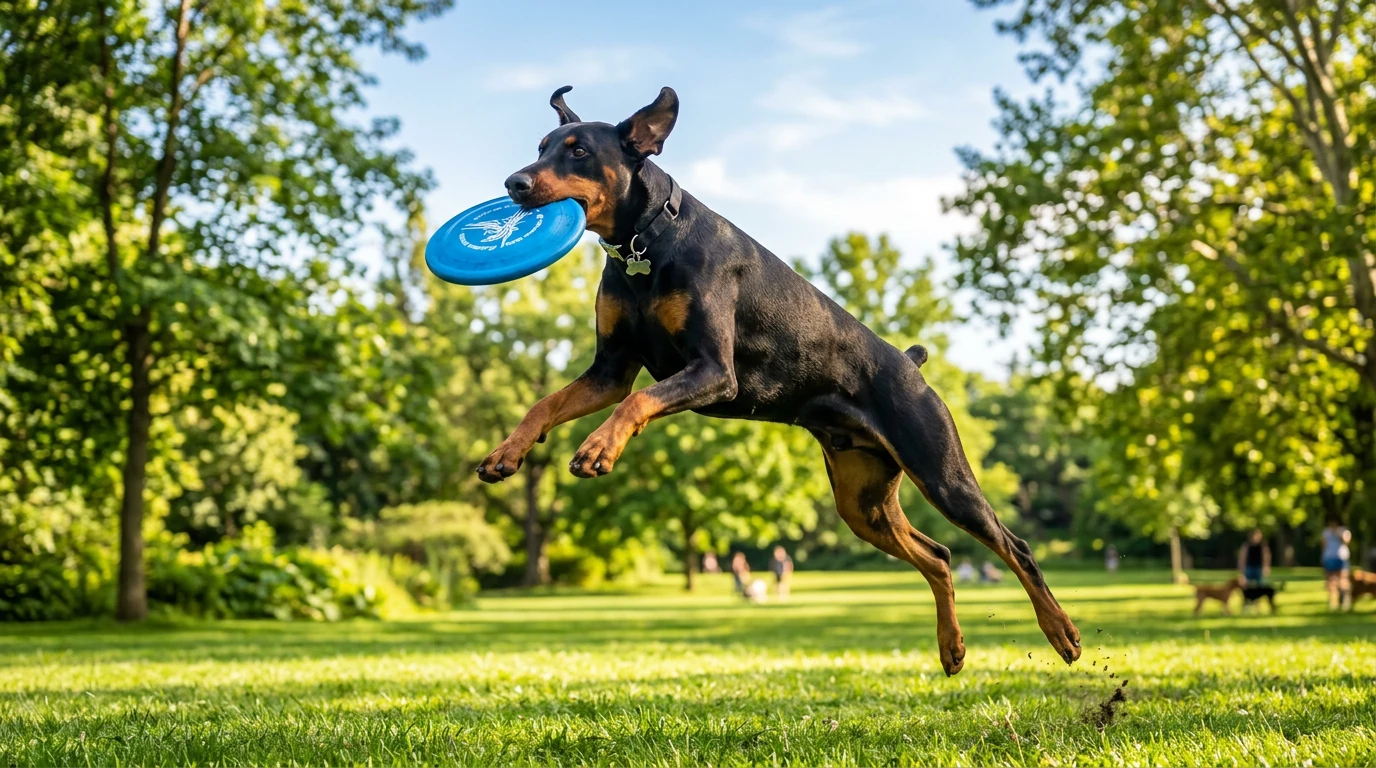
If you prefer a sedentary lifestyle, a Doberman is likely not the right match. Owners who want a more detailed breakdown of daily routines, energy management, and realistic activity planning should continue with How Much Exercise Does a Doberman Need? Energy, Routine, and Real-Life Balance. These dogs are athletes that require significant daily outlets for their physical energy and sharp minds.
| Activity Type | Recommended Daily Duration | Ideal Examples |
|---|---|---|
| Physical Exercise | 60 to 90 Minutes | Brisk walking, jogging, hiking, fetch in a fenced yard. |
| Mental Stimulation | 20 to 30 Minutes | Puzzle toys, nose work, agility drills, hide-and-seek. |
| Structured Training | 10 to 15 Minutes | Daily obedience practice, trick training, focus exercises. |
Without structured outlets for their energy, Dobermans can easily develop anxiety-based behaviors, such as destructive chewing, excessive barking, or pacing.
Grooming and Coat Care
Grooming a Doberman Pinscher is remarkably straightforward, making them a favorite for owners who prefer low-maintenance coats. They have a single, short coat that lies close to the skin.
- Brushing: A weekly brush-down with a rubber grooming mitt or a soft-bristle brush is usually enough to remove loose hair and keep their coat looking glossy.
- Bathing: They are generally clean dogs without a strong "doggy odor." They only require a bath every six to eight weeks unless they get into something particularly muddy.
- Nail Care: Dobermans have fast-growing, strong nails. Regular nail trims (every two to three weeks) are essential to prevent joint discomfort and splitting.
- Dental and Ear Care: Brush their teeth several times a week to prevent plaque buildup, and check their ears weekly for signs of irritation or debris.
Doberman Pinscher Ownership Guide: Training and Socialization
Readers who want the step-by-step version can continue with Doberman Training Basics: How to Build Focus, Manners, and Confidence for practical obedience structure, while Do Dobermans Bark a Lot? What Usually Triggers the Noise shows how alert behavior and vocal habits fit into the same picture.
Raising a balanced, confident Doberman requires a dedicated handler who understands the nuances of working-breed canine psychology. This doberman pinscher ownership guide outlines the core pillars of successful training.
The Golden Rule: Early Socialization
The importance of early, positive socialization cannot be overstated. Because Dobermans are naturally suspicious of strangers and foreign environments, they must be gently exposed to a wide variety of sights, sounds, people, and other animals during their critical developmental window (between 8 and 16 weeks of age).
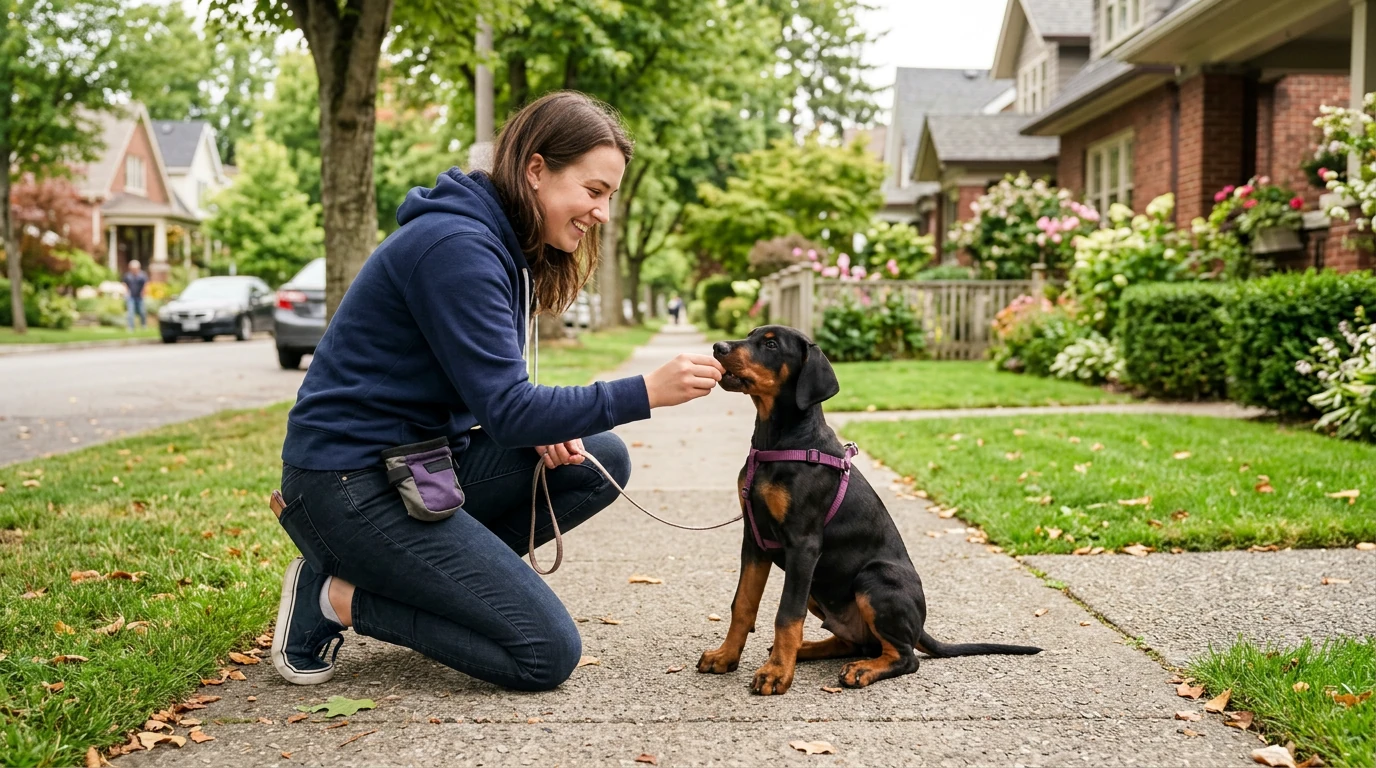
Take your puppy to dog-friendly stores, let them observe passing strollers, invite friends of various ages and appearances to your home, and reward your puppy with treats for calm, curious behavior. This prevents their natural protective instinct from warping into fear-based reactivity.
Positive Reinforcement is Key
Despite their tough, powerful appearance, Dobermans are incredibly sensitive dogs. That is exactly why Doberman Training Basics: How to Build Focus, Manners, and Confidence matters so much: structure and cooperation work far better than force with this breed. They do not respond well to harsh, physical corrections, yelling, or heavy-handed dominance training. Such methods can damage the bond of trust between you and your dog, leading to anxiety, defensiveness, or shutdown.
Instead, focus on positive reinforcement. Reward desired behaviors with high-value treats, praise, and play. Because they are so eager to work, they will quickly figure out what behaviors earn them rewards and repeat them enthusiastically. Keep training sessions short, fun, and intellectually challenging.
Setting Clear, Loving Boundaries
While they are sensitive, Dobermans are also strong-willed. If they sense a lack of leadership or consistency in the home, they may take it upon themselves to establish their own rules. Set clear boundaries from day one. If they are not allowed on the couch as adults, do not allow them on the couch as puppies. Consistency, routine, and gentle guidance are the foundations of a well-behaved Dobie.
Common Health Considerations
Some of these ownership questions also intersect with appearance and development, which is why Doberman Ears Explained: Posting, Taping, and the Natural Look, Docked Doberman or Natural Tail? What Owners Should Know, and Hunting Doberman: Can This Guardian Breed Work in the Field? are useful companion reads depending on what kind of Doberman life you are planning for.
Every prospective owner looking at a doberman pinscher breed guide must be aware of the health risks associated with the breed. If your main concern is long-term body development, Doberman Weight and Growth Chart: What Size to Expect at Each Stage gives a more specific age-by-age view of how structure and condition change over time. While they are generally robust, athletic dogs, they are genetically predisposed to several serious health conditions:
- Dilated Cardiomyopathy (DCM): This is a genetic disease that causes the heart muscle to enlarge and weaken, eventually leading to heart failure. It is one of the most critical health concerns in the breed. Always ask breeders if they perform annual echocardiograms and Holter monitor tests on their breeding dogs.
- Von Willebrand’s Disease (vWD): An inherited bleeding disorder caused by a lack of clotting protein. A simple DNA test can determine if a puppy is clear, a carrier, or affected.
- Wobbler Syndrome (Cervical Vertebral Instability): A neurological condition caused by compression of the spinal cord in the neck, leading to a wobbly gait and neck pain.
- Hip Dysplasia: A malformation of the hip joint that can cause painful arthritis. Responsible breeders screen their dogs' hips through organizations like the OFA (Orthopedic Foundation for Animals).
When buying a puppy, always work with a reputable breeder who openly shares the results of these genetic health screenings. If you are adopting, discuss these risks with your vet to establish a proactive wellness plan.
Is a Doberman Pinscher Right for You?
Before taking the plunge and bringing a Doberman home, it is vital to honestly assess if your lifestyle aligns with their unique needs. If your biggest questions are about safety, barking, training, body development, or the realities of daily care, it also helps to read the breed through narrower companion guides such as Are Doberman Pinschers Dangerous? What Their Temperament Really Tells You, Do Dobermans Bark a Lot? What Usually Triggers the Noise, Doberman Training Basics: How to Build Focus, Manners, and Confidence, and Doberman Weight and Growth Chart: What Size to Expect at Each Stage.
- Do you have the time? A Doberman cannot be left alone in a crate or a yard for 10 hours a day. They need human companionship, daily mental engagement, and intense physical exercise.
- Are you committed to training? A 70-to-90-pound dog with immense strength and protective instincts must be highly responsive to commands. Committing to lifelong training and socialization is non-negotiable.
- Do you appreciate a close companion? If you value personal space, a Doberman's constant desire to be glued to your side might feel overwhelming. But if you want a loyal, affectionate shadows that will follow you to the ends of the earth, you will find no better partner.
Final Thoughts
The Doberman Pinscher is a masterpiece of canine breeding—a perfect harmony of strength, intelligence, beauty, and devotion. When given the proper socialization, consistent positive training, and active lifestyle they deserve, they transition seamlessly from majestic guardians to gentle, clownish, and deeply affectionate family members. Armed with this knowledge, you are well-equipped to embark on a beautiful, life-changing journey with one of the most remarkable dog breeds on the planet.