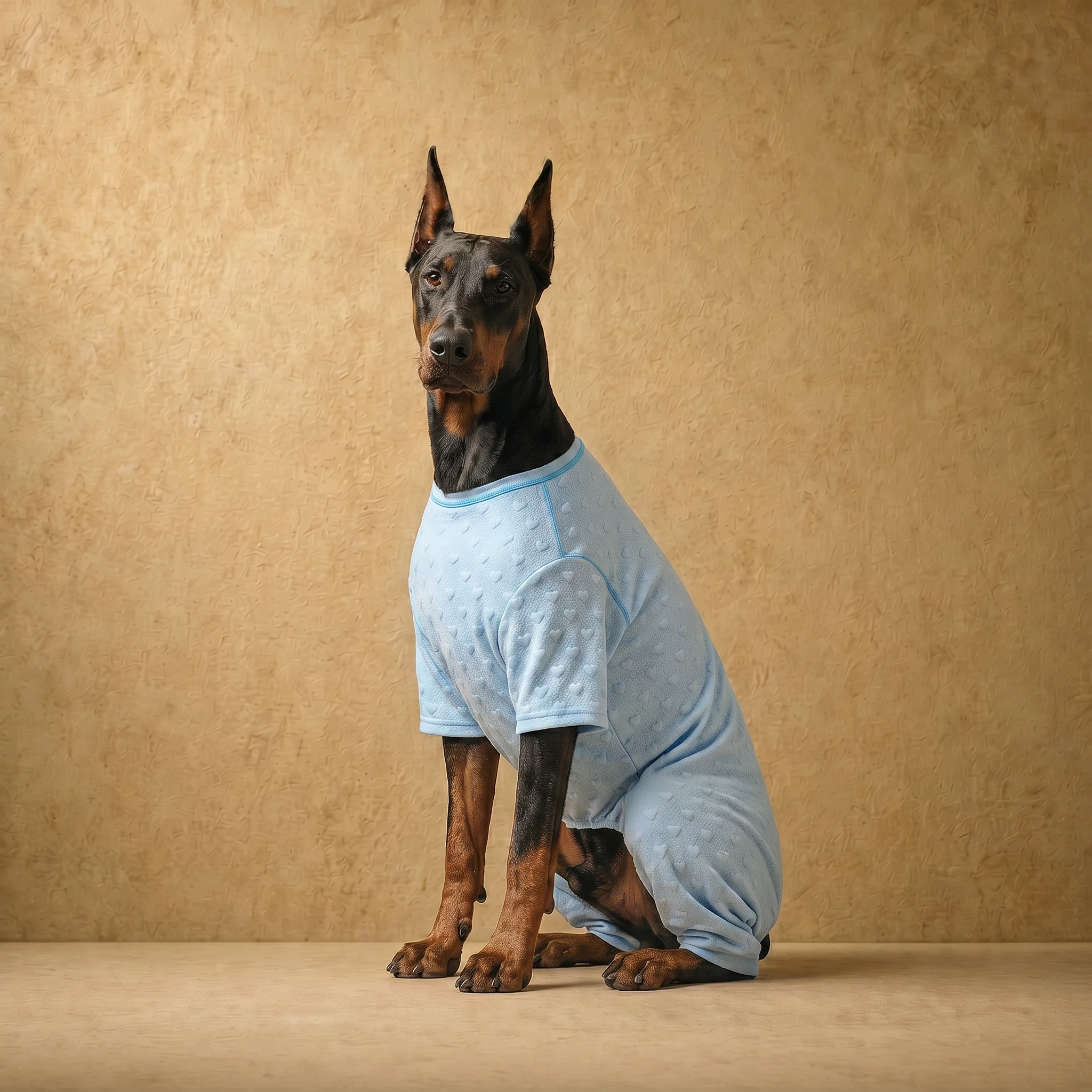
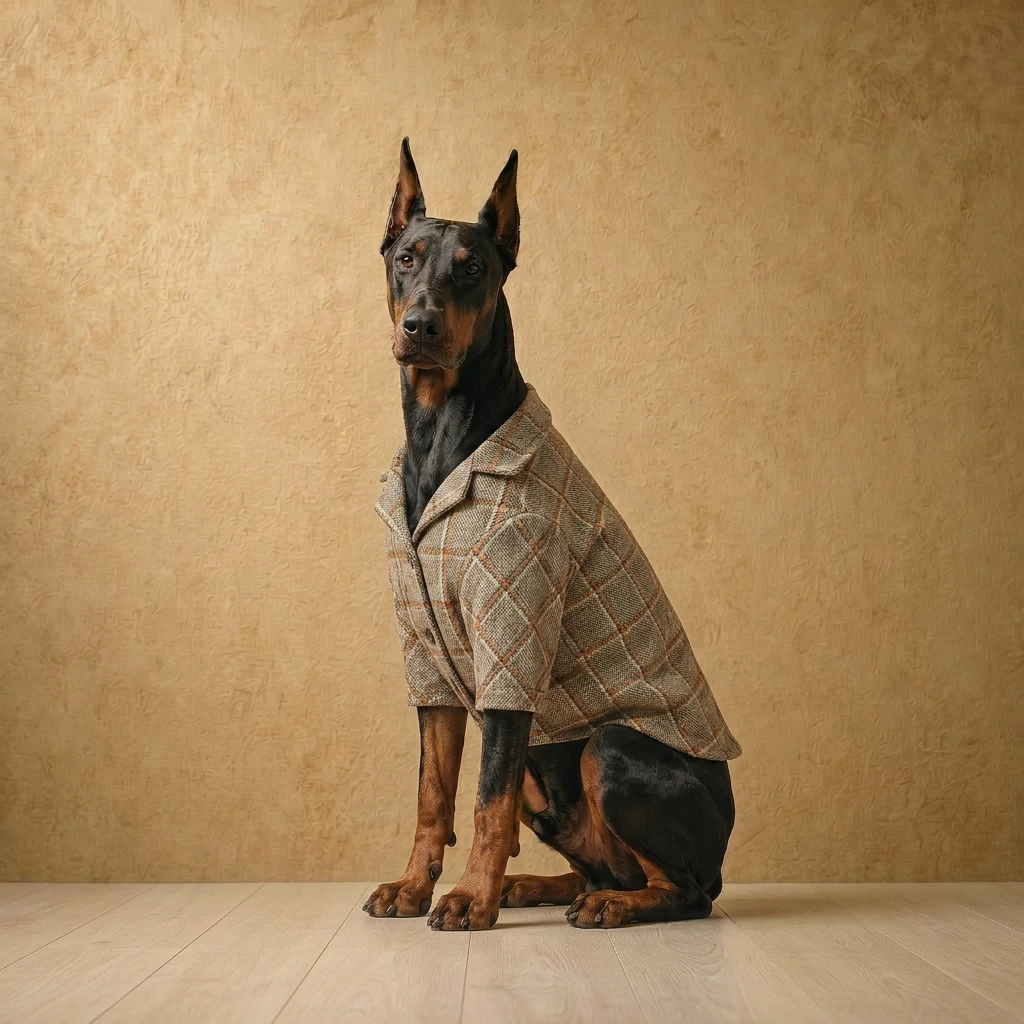
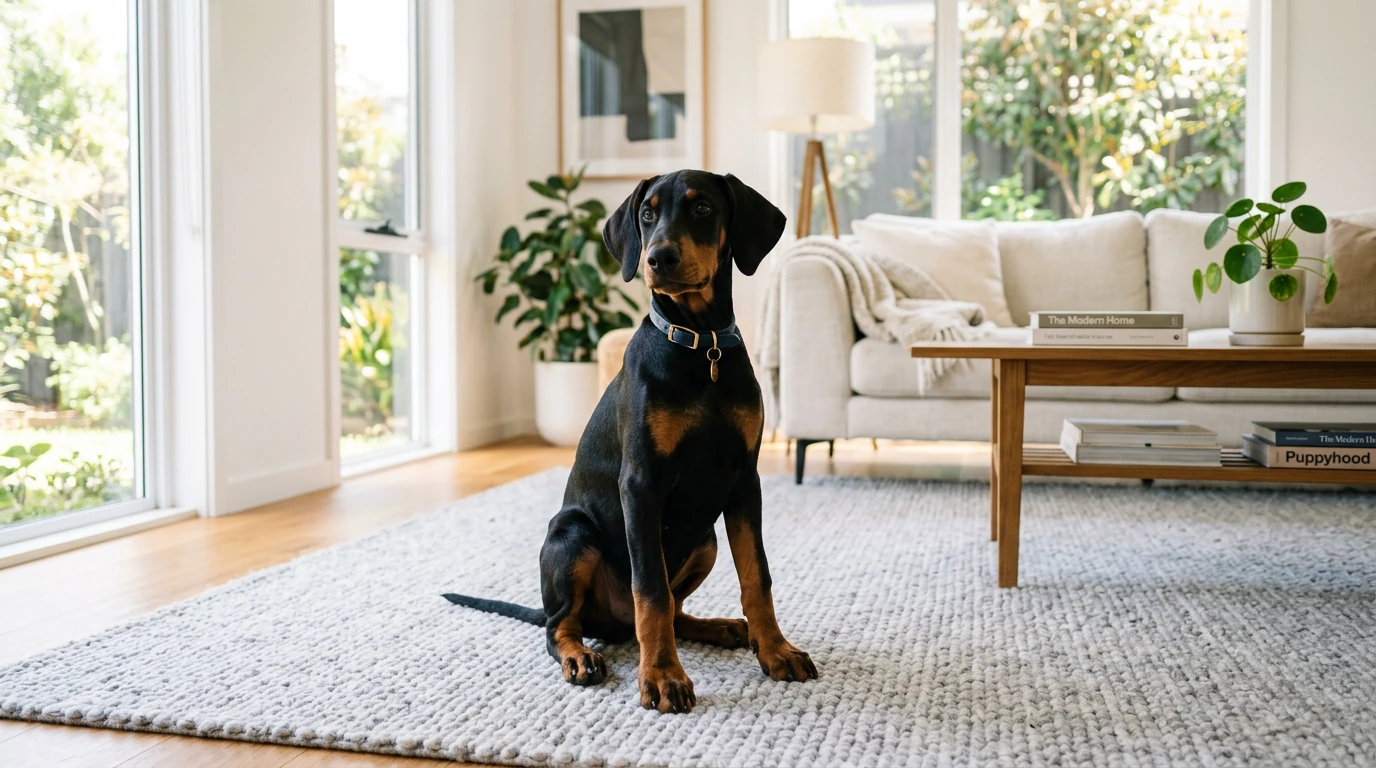
The silhouette of a Doberman Pinscher is one of the most recognizable in the canine world. Traditionally, that image includes a sleek, muscular body paired with alert, sharply pointed ears. However, many new dog owners are surprised to learn that Dobermans are not born with these upright ears. In their natural state, Dobermans have soft, floppy ears that hang down alongside their cheeks—a look that completely transforms their expression from intimidating to gentle.
Today, the choice between the traditional cropped look and the doberman natural look is a major topic of conversation among enthusiasts, breeders, and veterinarians. Achieving those classic upright ears requires a surgical procedure followed by a lengthy, hands-on process known as posting or taping.
If you are considering bringing a Doberman puppy into your home, understanding the reality of doberman taped ears, how the posting process works, and the charm of the uncropped look will help you make the best choice for your future companion.
This narrower guide makes more sense alongside the broader Doberman Pinscher Temperament, Care, and Ownership Guide, which frames how this topic fits into the bigger ownership picture.
The Natural Doberman: Soft, Floppy, and Friendly
Naturally, a Doberman’s ears look very similar to those of a Labrador Retriever or a hound. They are medium-sized, drop-down ears that frame the face. When a Doberman is left natural, their overall appearance shifts dramatically. The fierce, high-alert expression often associated with the breed softens into a warm, approachable, and highly expressive look.
In recent years, the doberman natural look has surged in popularity. Many owners prefer the softer aesthetic, while others choose to bypass the surgical and healing processes altogether.
Benefits of the Natural Look
Keeping a Doberman's ears natural offers several practical benefits for both the dog and the owner:
- No Surgery or Pain: Ear cropping is a surgical procedure performed under general anesthesia. Choosing the natural route spares the puppy from post-surgical discomfort and potential infections.
- No Taping Commitment: The process of taping and posting ears can take anywhere from several months to over a year of consistent, weekly effort.
- Enhanced Communication: Dogs use their ears to communicate emotions. Soft, natural ears are incredibly expressive, easily showing happiness, curiosity, or submission.
- Lower Initial Cost: By skipping the surgery and the specialized taping supplies, owners save hundreds (and sometimes thousands) of dollars.
The Science of Sound: How Do Dobermans Ears Stand Up?
To understand how do dobermans ears stand up, it is important to look at canine anatomy. Unlike breeds like the German Shepherd or Siberian Husky, whose ears naturally stand erect as their cartilage hardens during puppyhood, Dobermans do not have the genetic makeup for upright ears.
Left alone, the weight of the ear leather and the structure of the cartilage will always cause the ear to fold downward. For a Doberman's ears to stand up, two distinct phases must occur:
- The Surgical Crop: A licensed veterinarian performs a cosmetic surgery (usually between 8 and 12 weeks of age) to trim away the floppy outer edge of the ear leather, creating a narrower, pointed shape.
- The Posting (Taping) Process: The surgery alone does not make the ears stand. Once the surgical edges have completely healed and the stitches are removed, the ears must be held upright artificially using supportive structures. Over several months, the cartilage hardens in this upright position. Without this critical second step, the cropped ears will simply flop over, resulting in what is known as a "failed crop."
Understanding the Posting and Taping Process
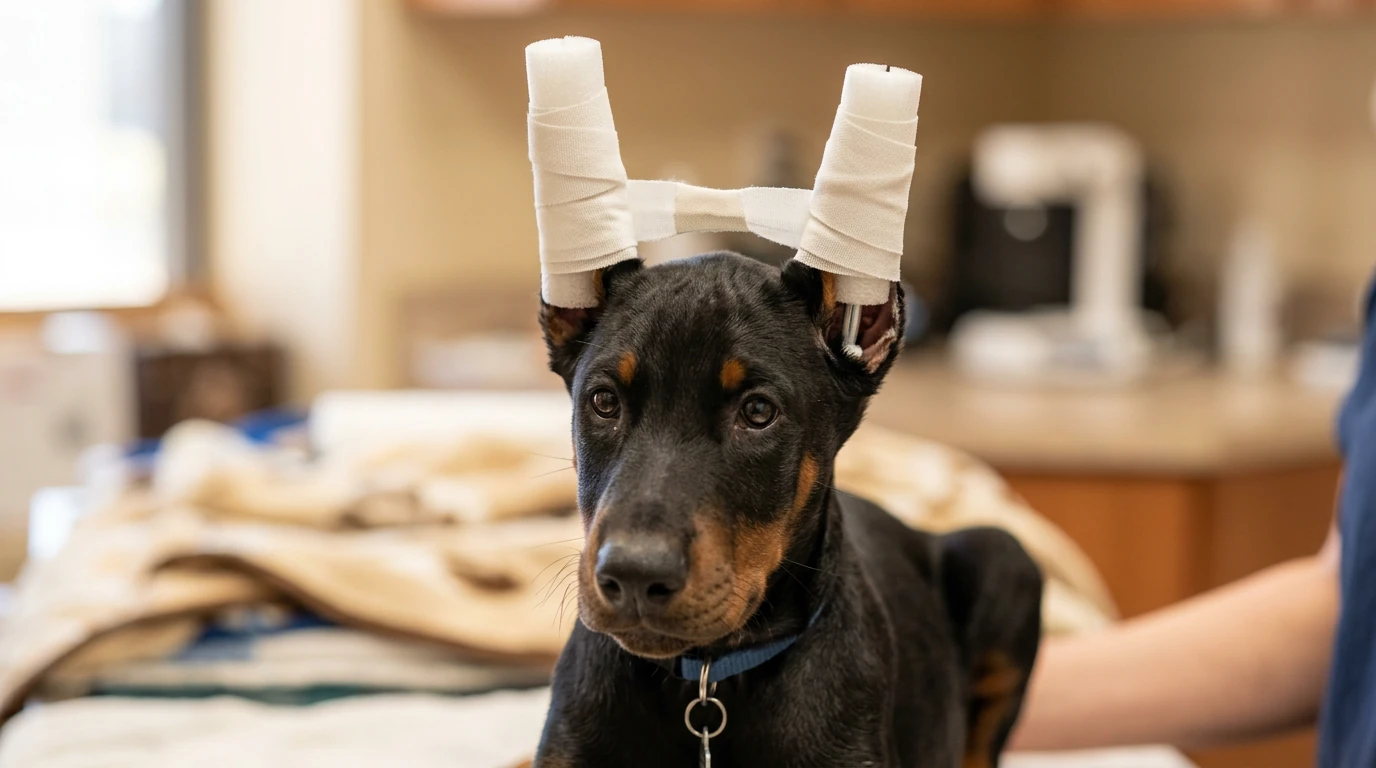
If an owner chooses to crop, they must commit to the rigorous routine of managing doberman taped ears. Posting is a art form that requires patience, hygiene, and consistency.
The Materials Used
To post a puppy's ears, owners typically use a variety of specialized supplies:
- Backer Rods: A flexible foam rod (commonly used for sealing gaps in construction) cut to the length of the puppy's ear. This serves as the internal support "post."
- Low-Tack Athletic Tape: Zone tape or Torbot bonding cement is used to wrap the ear around the post. The tape must be sticky enough to hold but gentle enough not to tear the puppy's delicate skin or pull out too much hair.
- Antiseptic Powder and Adhesive Remover: Used to keep the ears clean and painlessly dissolve the tape adhesive during changes.
The Step-by-Step Taping Cycle
Posting is not a one-time event. The tapes must be changed every 3 to 7 days, or immediately if they get wet, dirty, or begin to smell.
- Preparation: The ears are thoroughly cleaned, disinfected, and allowed to dry completely. Moisture trapped inside a taped ear can quickly lead to painful bacterial or yeast infections.
- Inserting the Post: The foam backer rod is inserted gently but deeply into the natural pocket at the base of the ear canal.
- Wrapping the Ear: The ear leather is pulled gently upward along the post to prevent folds or wrinkles. The athletic tape is then wrapped around the ear and post. It is crucial not to wrap the tape too tightly, as this can cut off blood circulation and cause severe tissue damage.
- Creating the Bridge: A strip of tape is often run between the two posted ears to hold them in a parallel, upright "11 o'clock" position, preventing them from flared outwards.
This cycle continues throughout the puppy's teething phase (usually up to 6 to 9 months of age), as the calcium needed to harden ear cartilage is often redirected to developing adult teeth during this time.
Natural vs. Cropped: A Side-by-Side Comparison
Making the decision between a cropped and a natural Doberman depends entirely on your lifestyle, aesthetic preference, and ability to commit to post-operative care.
| Feature | Cropped & Taped Ears | Natural Ears |
|---|---|---|
| Appearance | Alert, traditional, working-dog aesthetic | Soft, approachable, hound-like aesthetic |
| Procedure | Surgical cropping under anesthesia | None (completely natural) |
| Care Required | Weekly taping, posting, and cleaning for 4–12 months | Standard weekly ear cleanings |
| Risk of Infection | Higher during surgical healing and taping phases | Low (typical for drop-eared breeds) |
| Financial Investment | High (surgery costs + ongoing taping supplies) | None |
| Legality | Restricted or banned in many countries (UK, EU, Australia) | Legal worldwide |
The Crucial Link to Responsible Ownership
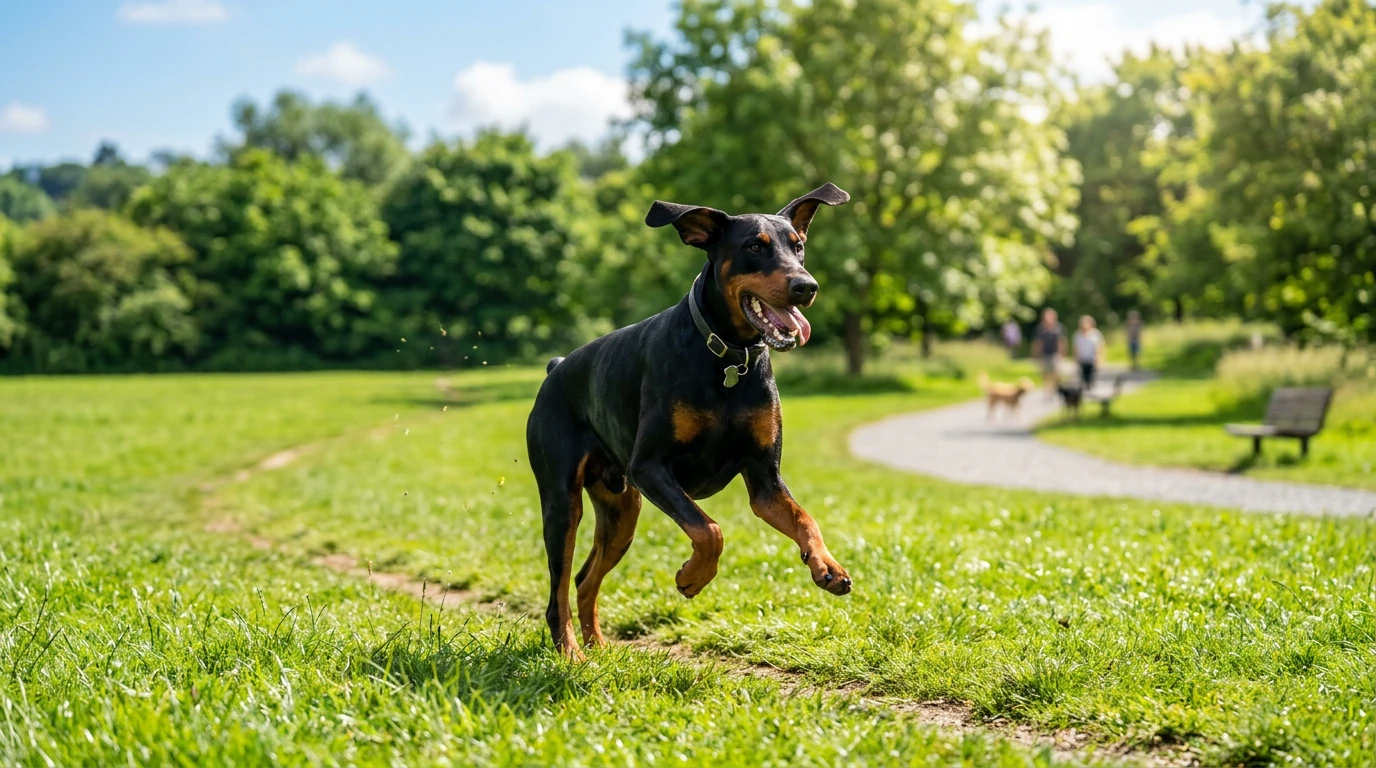
Choosing the ear style of your Doberman is just one small aspect of welcoming this incredible breed into your life. Dobermans are highly intelligent, energetic, and deeply loyal dogs that thrive on human companionship. Regardless of whether they have cropped or natural ears, they require consistent socialization, positive reinforcement training, and plenty of mental stimulation.
If you're preparing to welcome one of these loyal dogs into your home, understanding their grooming, exercise, and training needs is just as crucial as deciding on their ear style. Our comprehensive Doberman Pinscher Temperament Care and Ownership Guide covers everything you need to know about raising a happy, balanced Doberman, helping you navigate their developmental milestones with confidence.
Gentle Ear Care for Every Doberman
Whether your Doberman has natural, floppy ears or cropped, upright ears, keeping them clean and healthy is a key part of your weekly grooming routine.
Caring for Natural Ears
Drop ears trap moisture and dirt more easily than upright ears. To prevent infections:
- Check the ears weekly for redness, debris, or a sweet, musty odor (which can indicate a yeast infection).
- Clean the ears using a veterinarian-approved ear cleaner and a cotton ball. Never insert cotton swabs (Q-tips) deep into the ear canal.
- Dry the ears thoroughly after baths, swims, or rainy walks.
Caring for Taped Ears
During the posting phase, vigilance is key:
- Keep your puppy out of the rain and away from water bowls that might soak the tapes.
- If the tapes get wet, remove them immediately, clean the ears, let them dry completely, and post them again with fresh materials.
- Give the ears a brief break (no more than a few hours) between postings to let the skin breathe, but do not leave them unposted for too long, or the cartilage may begin to sag.
Frequently Asked Questions
Does ear cropping hurt the puppy?
Ear cropping is a surgical procedure performed under anesthesia, so the puppy does not feel pain during the surgery. However, there is discomfort during the healing phase. Pain management medications are typically prescribed by the veterinarian to keep the puppy comfortable during recovery.
How long does the posting process take?
On average, posting takes anywhere from 4 to 8 months. The exact timeline depends on the length of the crop (longer "show crops" take much longer to stand than shorter "pet crops"), the strength of the puppy's cartilage, and the owner's consistency in keeping the ears posted.
What happens if I stop taping too early?
If you stop taping before the cartilage has fully hardened, the ears will droop or sag. This can result in one ear standing while the other flops, or both ears folding awkwardly over the head. Consistency is key to a successful outcome.
Is ear cropping legal?
Ear cropping is legal in the United States and Canada, though it is highly regulated and must be performed by a licensed veterinarian. However, the practice is banned in many parts of the world, including the United Kingdom, most of Europe, Australia, and New Zealand, where the doberman natural look is the standard.
Conclusion
Whether you fall in love with the classic, alert silhouette of doberman taped ears or the charming, soft expression of the doberman natural look, your dog will be the same loyal, protective, and affectionate companion at heart.
If you choose to crop, ensure you work with an experienced, reputable veterinarian and commit fully to the diligent care required during the posting phase. If you choose the natural route, you can sit back, skip the tape, and enjoy the expressive, floppy-eared charm of a happy, comfortable Doberman.