Docked Doberman or Natural Tail? What Owners Should Know
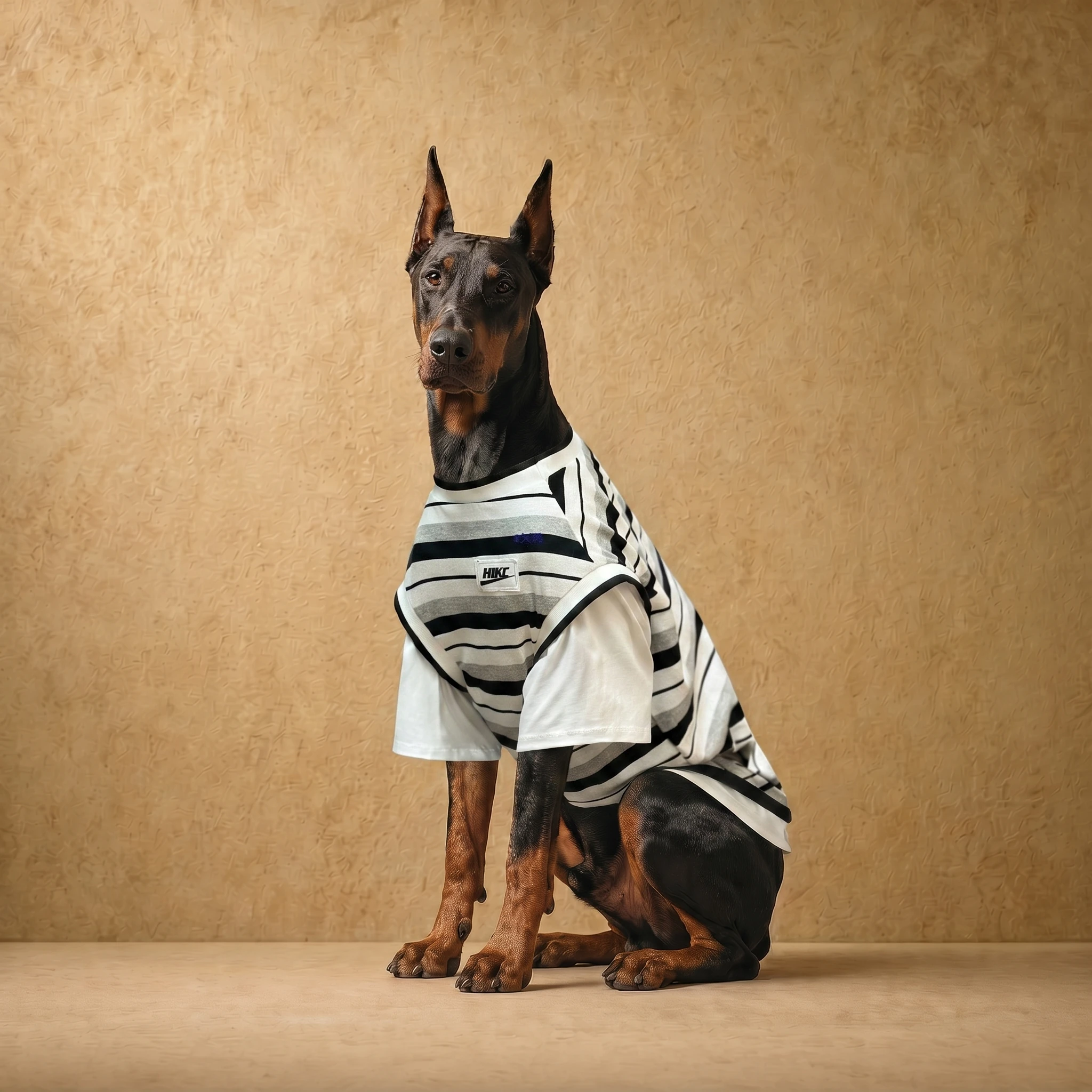
When you picture the quintessential protection dog, chances are your mind immediately conjures the sleek, striking silhouette of a classic black tan doberman. With its alert, upright ears and a short, stubby tail, this iconic image is deeply ingrained in our cultural consciousness, representing strength, nobility, and unwavering loyalty. For decades, this has been the standard visual representation of the breed in film, television, and international dog shows.
However, as veterinary practices evolve and kennel club standards shift around the globe, many prospective owners are being introduced to a very different silhouette. The sight of a natural Doberman—complete with floppy ears and a long, swooping tail—is becoming increasingly common. This shift often leads to confusion and curiosity among dog lovers and potential owners. The debate between maintaining the traditional look of a docked doberman and embracing the breed's natural state is a nuanced one, steeped in history, anatomy, and modern ethics.
Whether you are bringing home a new puppy or simply seeking to understand this magnificent breed better, it is important to look past the surface. In this comprehensive guide, we will explore the realities of Doberman tail and ear docking, understand the anatomy of a doberman pinscher with tail, and discuss what everyday life is like with these incredible, highly intelligent dogs.

This narrower guide makes more sense alongside the broader Doberman Pinscher Temperament, Care, and Ownership Guide, which frames how this topic fits into the bigger ownership picture.
Are Dobermans Born With Tails?
It is one of the most frequently asked questions by those unfamiliar with the breed's history: are dobermans born with tails? The answer is an unequivocal yes. Like almost all other dog breeds, Doberman Pinschers are born with long, natural tails.
When a black tan doberman puppy enters the world, its tail is remarkably thin and relatively long compared to its small body. As the puppy grows, the tail thickens at the base and tapers toward the tip, developing into a surprisingly robust and whip-like appendage. The persistent misconception that Dobermans are naturally tailless stems entirely from how quickly the docking procedure has historically been performed. Because traditional tail docking takes place when the puppies are mere days old, the vast majority of the public—and even many owners—have never seen a Doberman puppy with its natural tail intact.
Genetically, there is no such thing as a naturally bobtailed Doberman. Every single docked doberman you see walking down the street or competing in an agility ring was born with a full-length tail that was surgically altered shortly after birth.
The Look and Language of a Doberman Pinscher With Tail
If you have never seen a doberman with tail, the visual can initially be quite striking. The natural tail of a Doberman is long, extending down to the hock (the canine equivalent of the ankle), and typically carries a slight upward curve, often described as a "hound-like" or "saber" tail.
Having an intact tail fundamentally changes the aesthetic balance of the dog. While the docked doberman presents a highly compact, square-proportioned, and undeniably imposing figure, a doberman pinscher with tail exudes a more fluid, athletic, and approachable appearance. The classic black tan doberman markings—the rust-colored patches above the eyes, on the muzzle, chest, and legs—remain the same, but the overall outline is softened.
More importantly, a tail is a crucial tool for canine communication. Dogs use their tails to signal everything from joy and excitement to anxiety, submission, and alertness. A natural Doberman has a highly expressive tail that functions as a highly visible barometer of its mood. When they are at play, the tail wags in broad, sweeping arcs. When they are on high alert, the tail stiffens and raises. Furthermore, the tail serves a vital mechanical purpose; it acts as a counterbalance when the dog is executing tight turns at high speeds, providing the Doberman with exceptional agility and spatial coordination.
The History Behind Doberman Tail and Ear Docking
To understand why the docked doberman became the global standard, we must travel back to late 19th-century Germany. The breed was developed by Karl Friedrich Louis Dobermann, a tax collector, night watchman, and local dogcatcher in the town of Apolda. Given the dangerous nature of his professions, Dobermann sought to breed the ultimate protection dog—a companion that was intimidating, fearless, and relentlessly loyal.
In the line of duty, a guard dog engaged in physical confrontation faced significant risks. Long, floppy ears and long, thin tails were viewed as liabilities. They were "handles" that an attacker—human or animal—could grab, pull, or injure during a fight. A torn ear or a broken tail could sideline a working dog for weeks, causing severe pain and potential infection.
Consequently, doberman tail and ear docking became standard utilitarian practices. By cropping the ears so they stood erect, owners believed they were not only removing a vulnerability but also enhancing the dog's ability to localize sound. By docking the tail, they eliminated a fragile appendage that was prone to being stepped on or broken during chaotic altercations. Over the decades, these functional modifications solidified into the breed standard. The striking, angular look of the altered black tan doberman became synonymous with the breed's identity as a premier protector.
Understanding the breed's working origins provides incredible context for their intense loyalty and high energy levels today. If you want to dive deeper into how this history shapes their modern behavior, be sure to read our comprehensive Doberman Pinscher Temperament Care and Ownership Guide, which covers everything from early socialization to daily exercise requirements.

The Procedure and the Standard Doberman Tail Docking Length
For those who adhere to the traditional American Kennel Club (AKC) standards, tail docking is still an expected practice for show dogs. The procedure is typically performed by a veterinarian when the puppies are between three and five days old. At this neonatal stage, the nervous system is not fully developed, and the cartilage in the tail is still very soft, which advocates argue minimizes the pain and trauma of the procedure.
When it comes to the specific doberman tail docking length, breed standards are remarkably precise. The AKC standard dictates that the tail should be docked at approximately the second joint. This specific length is chosen carefully; leaving it at the second joint ensures that the remaining nub is just long enough to comfortably cover the dog's anus for hygiene and protection, but short enough to maintain the classic, compact silhouette. If the tail is docked too short, it can cause nerve damage or issues with the dog's pelvic floor muscles. If it is docked too long, it is considered a fault in the show ring.
Ear cropping, on the other hand, is a more intensive procedure performed later, usually between seven and nine weeks of age, followed by weeks or even months of careful taping and posting to ensure the ears stand erect.
The Modern Debate: Ethics and Legality
Today, the landscape surrounding doberman tail and ear docking is shifting rapidly. What was once unquestioned tradition is now the subject of intense ethical and veterinary debate.
Many prominent veterinary organizations, including the American Veterinary Medical Association (AVMA), have formally opposed routine tail docking and ear cropping when performed solely for cosmetic purposes. They argue that since the vast majority of modern Dobermans are beloved family pets rather than working police or military dogs, the risk of tail injury is not high enough to justify the preventative surgical amputation.
Internationally, the docked doberman is becoming a rarity. In many parts of the world, including the United Kingdom, Australia, and much of the European Union, cosmetic tail docking and ear cropping have been legally banned. In these regions, a doberman pinscher with tail is the only legally permissible variation, and kennel club breed standards have been rewritten to reflect the natural state of the dog.
In the United States, the practice remains legal and is fiercely defended by preservation breeders who argue that the cropped and docked look is an essential part of the breed's historical identity and heritage.
Living with a Natural Black Tan Doberman
If you choose to welcome a doberman with tail into your home, there are a few practical considerations to keep in mind. Dobermans are large, powerful, and deeply affectionate dogs—often affectionately referred to as "Velcro dogs" because they love to lean against and stay incredibly close to their human companions.
When a Doberman is happy, that long tail wags with tremendous force. Owners of a natural Doberman quickly learn to clear off their coffee tables, as a happy, sweeping tail can easily knock over cups, picture frames, and decorations. Additionally, because the tail is relatively thin and unpadded, it can be susceptible to "happy tail syndrome"—a condition where the dog wags its tail so enthusiastically against walls or furniture that the tip splits open and bleeds.
However, these minor inconveniences are far outweighed by the joy of seeing your dog's full range of emotional expression. The natural tail serves as a beautiful extension of the black tan doberman's sleek, muscular physique.

Making the Right Choice for Your Family
Deciding between a docked doberman and a natural Doberman is a deeply personal choice for prospective owners in countries where both options are available. If you are purchasing a puppy from a reputable, preservation breeder in the United States, you may find that the breeder has already made the decision to dock the tails within the first few days of life, as they are breeding to conform to current AKC standards.
Conversely, if you specifically want a natural Doberman, you may need to seek out breeders who intentionally leave their litters intact, or you can look into breed-specific rescues where Dobermans of all shapes, sizes, and tail lengths are waiting for their forever homes.
Ultimately, whether your black tan doberman has a tiny nub or a long, sweeping saber tail, the dog inside remains exactly the same. They are brilliant, fiercely loyal, deeply sensitive, and athletic companions. A Doberman's true defining feature is not the shape of its ears or the length of its tail, but the boundless devotion it offers to the family lucky enough to call it their own.