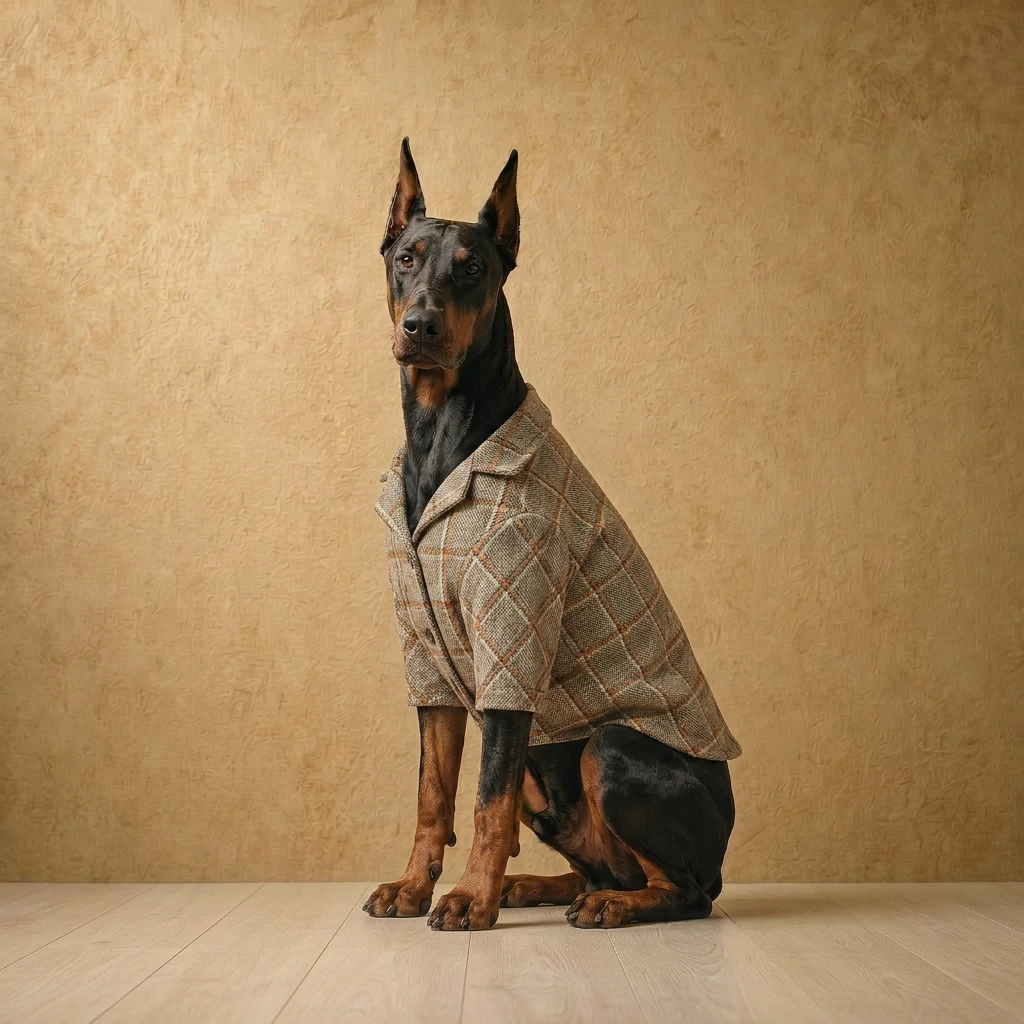
There is something incredibly heartwarming about dressing your canine companion in a hand-knit creation. As the chilly winds blow, a cozy knit layer keeps them warm, comfortable, and looking undeniably stylish. While many modern pet garment patterns rely on circular needles or double-pointed needles, not everyone enjoys working in the round. If you prefer the familiar, rhythmic click of classic single-pointed pins, you are in the right place.
This guide delivers a complete, easy-to-follow free dog sweater knitting pattern straight needles crafters of all levels can conquer. We will focus on a versatile small dog jumper knitting pattern that is worked flat in panels and seamed together. By the end of this article, you will have all the knowledge, steps, and fit tips needed to create beautiful, custom-fit knitted dog sweaters for your favorite four-legged friends.
This narrower guide makes more sense alongside the broader Dog Sweaters, Hoodies, and Everyday Cold-Weather Layers, which frames how this topic fits into the bigger ownership picture.
The Straight Needle Advantage for Pet Sweaters
If you have ever felt intimidated by circular knitting, you are not alone. Knitting on straight needles offers several distinct advantages, especially for pet wear:
- Simplicity: Working flat means you only need to master basic knit and purl stitches without worrying about twisting your stitches in the round.
- Portability: Straight needles and flat panels are easy to pack up and knit on the go.
- Easy Troubleshooting: Dropped stitches and tension mistakes are much easier to spot and fix when your work lies completely flat.
- Clear Structure: Knitting a back panel and a chest panel separately makes it incredibly easy to customize the width, length, and leg openings to suit your dog's unique shape.
While round knitting is great for seamless garments, flat knitting followed by simple mattress-stitch seaming creates sturdy seams that help the sweater hold its structure over time, preventing it from sagging after repeated wears and washes.
Choosing the Right Yarn and Tools
Before casting on, choosing the right materials is paramount to the comfort and safety of your pet. Dogs are active, they roll in the dirt, and their skin can be sensitive to coarse fibers.
Yarn Selection
When select yarn for knitted dog sweaters, aim for fibers that are:
- Washable: Machine-washable acrylics or superwash wool blends are best. Avoid delicate silks or non-superwash wools that will shrink to doll-size if accidentally thrown in the washing machine.
- Soft and Breathable: Look for worsted weight (medium/category 4) yarn that feels soft against your inner wrist. Scratchy fibers can cause chafing around your dog's armpits.
- Durable: A tightly spun multi-ply yarn will resist pilling and snagging during outdoor play.
Tools Checklist
To complete this pattern, gather the following supplies:
- One pair of US size 8 (5.0 mm) straight knitting needles (or size needed to obtain gauge)
- Worsted weight yarn (approx. 100 to 150 grams for a small dog)
- A tapestry needle (yarn needle) for seaming and weaving in ends
- A flexible measuring tape
- Two stitch markers
- Scissors
Sizing Chart & How to Measure Your Dog
To ensure your small dog jumper knitting pattern fits like a glove, you must measure your pet accurately. Don't rely solely on breed assumptions; even dogs of the same breed can have widely differing chest depths and lengths.
Use a soft measuring tape to record these three key measurements:
- Neck Circumference: Measure around the widest part of the neck where a collar naturally sits.
- Chest Girth: Measure around the deepest part of the ribcage, directly behind the front legs.
- Back Length: Measure from the base of the neck (between the shoulder blades) to the base of the tail.
| Sweater Size | Fits Neck Girth | Fits Chest Girth | Finished Back Length |
|---|---|---|---|
| Extra Small (XS) | 7" - 9" | 11" - 13" | 10" |
| Small (S) | 9" - 11" | 13" - 16" | 12" |
| Medium (M) | 11" - 14" | 16" - 20" | 15" |
Note: The pattern below is written for size Small (S), with modifications for Extra Small (XS) and Medium (M) in parentheses.
The Pattern: Small Dog Jumper Knitting Pattern (Worked Flat)
This pattern is worked in two flat pieces: the Back Panel (which runs along the dog's spine) and the Chest/Underbelly Panel (which covers the chest and ends mid-belly to allow easy potty breaks). The two pieces are then sewn together, leaving openings for the front legs.
Gauge
18 stitches and 24 rows = 4 inches (10 cm) in stockinette stitch on US size 8 (5.0 mm) needles.
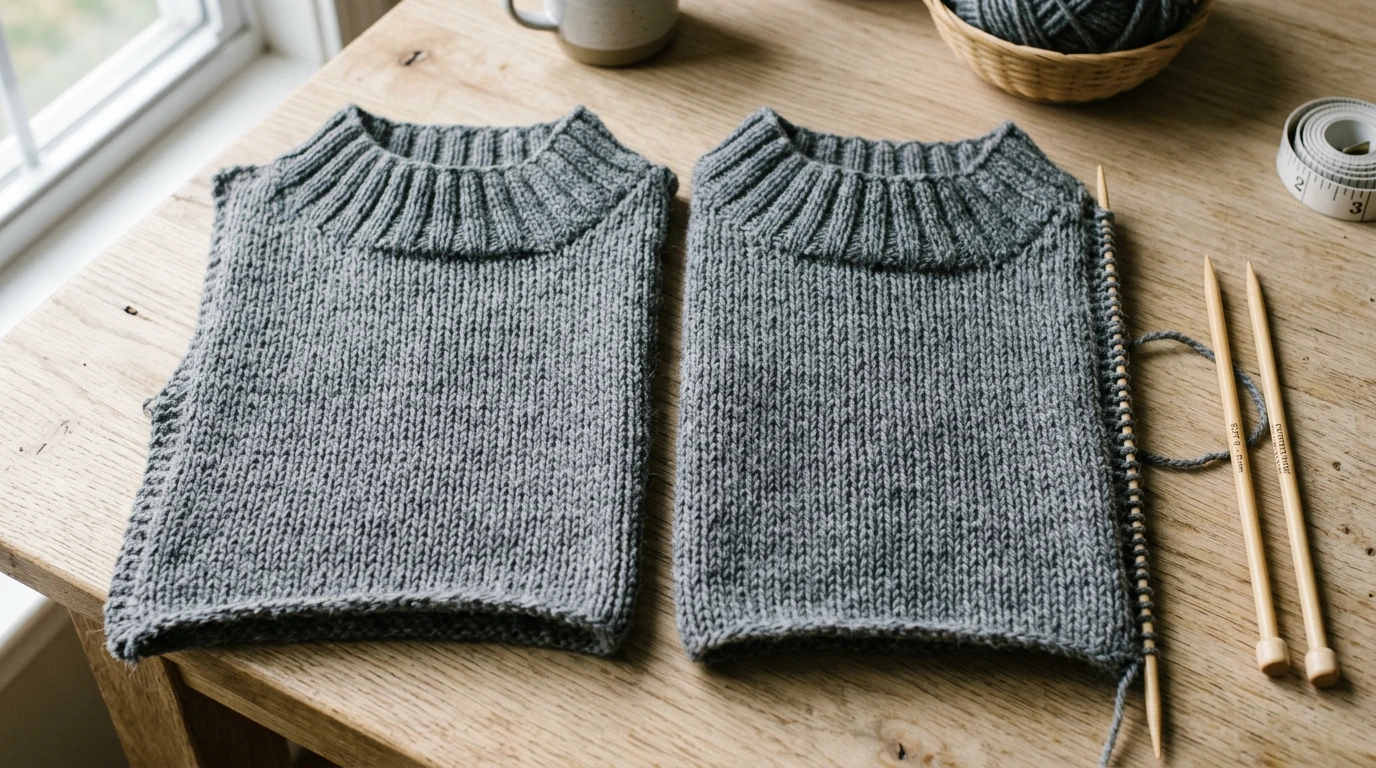
Step 1: The Back Panel
This panel forms the main decorative top of the sweater.
- Cast On: Cast on 36 (28, 44) stitches using your preferred cast-on method.
- Neck Ribbing:
- Row 1: K2, P2; repeat from to end of row.
- Repeat Row 1 for a total of 8 (6, 10) rows. This creates a cozy ribbed collar.
- Main Body (Stockinette Stitch):
- Row 1 (Right Side): Knit all stitches.
- Row 2 (Wrong Side): Purl all stitches.
- Repeat these two rows until the piece measures 8" (6", 10") from the cast-on edge, ending with a purl row.
- Back Shaping (Tapering the Rear):
- Row 1 (RS): K1, K2tog, knit to the last 3 stitches, SSK, K1. (34 (26, 42) sts remaining)
- Row 2 (WS): Purl all stitches.
- Repeat these two rows 3 (2, 4) more times. (28 (22, 34) sts remaining)
- Bottom Ribbing:
- Row 1: K2, P2; repeat from to end of row.
- Repeat this ribbing row for 6 rows.
- Bind Off: Bind off all stitches loosely in pattern. Cut yarn, leaving a 12-inch tail.
Step 2: The Chest & Underbelly Panel
This narrower piece covers the chest and stops short of the hindquarters.
- Cast On: Cast on 16 (12, 20) stitches.
- Neck Ribbing:
- Row 1: K2, P2; repeat from to end of row.
- Repeat Row 1 for 8 (6, 10) rows.
- Main Body:
- Row 1 (RS): Knit all stitches.
- Row 2 (WS): Purl all stitches.
- Repeat these two rows until the chest panel measures 6" (5", 8") from the cast-on edge, ending with a purl row.
- Bottom Ribbing:
- Row 1: K2, P2; repeat from to end of row.
- Repeat this ribbing row for 6 rows.
- Bind Off: Bind off all stitches loosely in pattern. Cut yarn, leaving a long tail for seaming.
Assembly & Seaming
Now that you have two flat panels, it is time to assemble them into a wearable sweater. Lay both pieces flat on a clean surface with the Right Sides (the smooth knit side of the stockinette stitch) facing up.
- Align the Pieces: Align the collar edges of the Back Panel and the Chest Panel.
- Sew the Collar/Shoulder Seams: Thread your tapestry needle with one of the long yarn tails. Use a mattress stitch to sew the side edges of the collar together down to the start of the stockinette body (about 1.5" to 2"). Secure the thread but do not cut it yet.
- Create the Leg Openings: Leave an unsewn gap on both sides for the front legs. For a small dog, this gap should be roughly 2" to 2.5" long. This ensures their legs can move freely without rubbing.
- Sew the Side Seams: Below the leg openings, sew the side seams of the Back Panel and Chest Panel together. Stop when you reach the end of the shorter Chest Panel.
- Secure and Finish: Weave in all loose yarn ends securely on the inside (wrong side) of the sweater. Cut off any excess tail.
If you want to take your dog's style to the next level, you can even craft a coordinating headwear piece using our step-by-step Dog Knit Hat Pattern to make a adorable matching winter ensemble!
Crucial Fit Tips for Different Dog Breeds
Not all dogs are built the same way. A stocky French Bulldog will require a much wider chest panel than a slender Italian Greyhound.
When knitting, keep these body shapes in mind:
- Deep-Chested Breeds: Breeds with deep chests and incredibly narrow waists (like Whippets or miniature Poodles) need extra width in the chest area but a tapered belly. If you are knitting for much larger deep-chested breeds, you will need to significantly scale up your stitch counts. For instance, large, athletic dogs like those detailed in our comprehensive Doberman Pinscher Temperament Care and Ownership Guide require custom-sized winter wear with substantial chest room and durable seams to accommodate their powerful stride.
- Male Dogs: Ensure the underbelly panel is short enough so it does not interfere when they go to the bathroom. If you have a male dog, feel free to bind off the chest panel 1 to 2 inches early to avoid messy accidents.
- Broad Shoulders: If your dog has a broad chest, consider adding 4 extra stitches to the Chest Panel cast-on, and subtracting 4 stitches from the Back Panel to maintain the overall circumference while shifting the room to where they need it most.
For more complex customizations, textured designs, and sizing calculators, check out our companion guide on Knitted Sweaters for Dogs Patterns: Patterns, Fit Tips, and Practical Ideas.
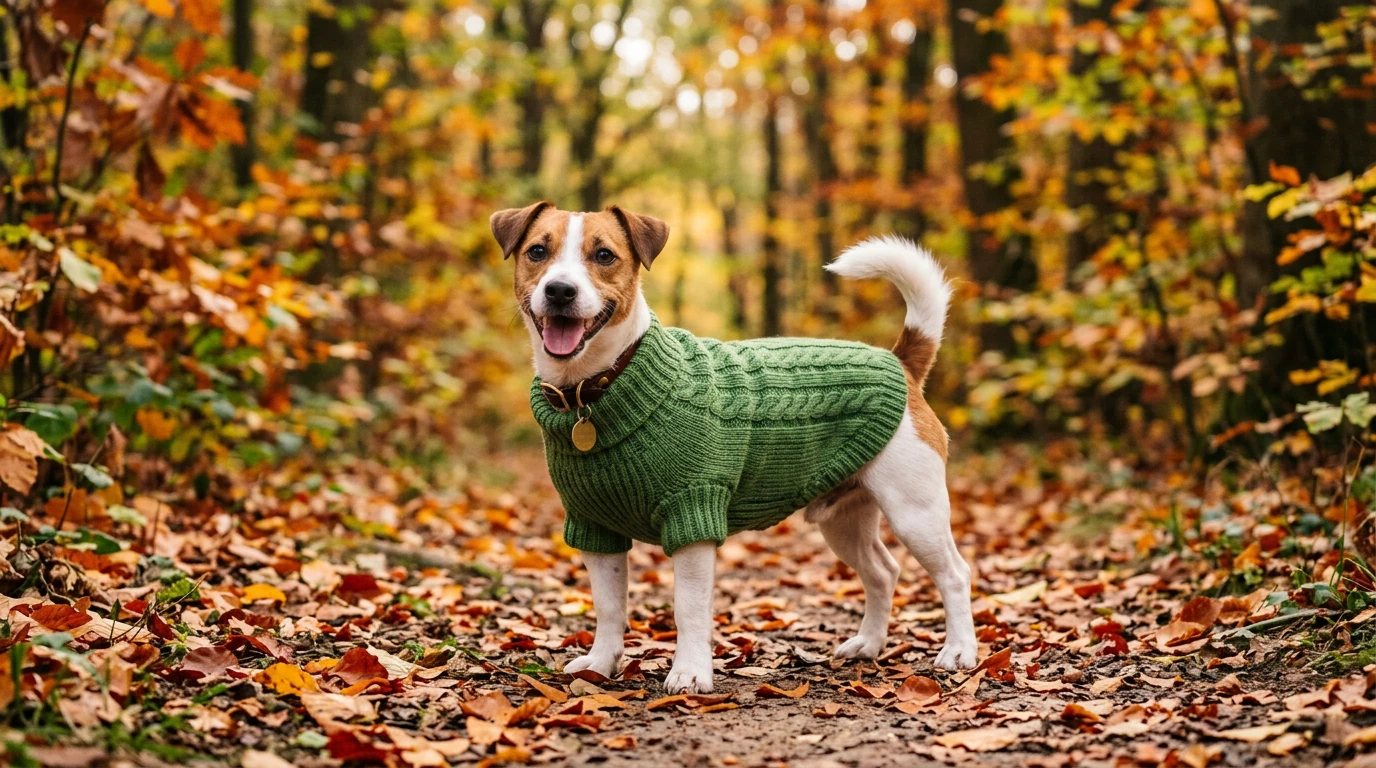
Practical Ideas & Care Tips for Knitted Dog Sweaters
Once your sweater is off the needles, a few simple practices will ensure it stays beautiful and functional for many winters to come:
- Blocking Your Work: Before putting the sweater on your dog for the first time, wet block the pieces. Soak the knit panels in lukewarm water with a drop of gentle wool wash, gently squeeze out the excess moisture in a towel, shape them to the correct measurements on a foam blocking mat, and let them dry completely. This relaxes the stitches and makes the seams sit perfectly flat.
- Frequent Washing: Dog sweaters accumulate dirt, mud, and natural dog oils quickly. Wash your hand-knit sweaters at least once a month. If using acrylic yarn, a gentle cycle in a mesh laundry bag followed by low-heat drying works beautifully. For wool blends, hand washing in cool water and laying flat to dry is safest.
- Snag Prevention: Keep your dog's nails trimmed. Sharp, overgrown dewclaws are the number one cause of pulled loops and ruined hand-knit garments.
Frequently Asked Questions
Can I use circular needles flat for this pattern?
Absolutely! If you prefer using circular needles but dislike knitting in the round, you can simply work back and forth on circulars just as you would on straight needles. This is especially helpful if you are knitting a larger size and have too many stitches to fit comfortably on a standard straight needle.
How do I know if the neck is too tight?
When you slip the finished sweater over your dog's head, you should easily be able to fit two fingers comfortably between the knitted collar and your dog’s neck. If it feels snug or causes your dog to pull back, you should back up and knit the collar section using a larger needle size or a stretchier bind-off method.
What is the best cast-on for stretchy edges?
For the neck collar, use the Long-Tail Cast-On or the German Twisted Cast-On. These methods provide excellent elasticity, allowing the sweater to slip smoothly over your dog's ears without stretching out of shape permanently.
Summary
Knitting a sweater flat on straight needles is an enjoyable, low-stress project that yields highly functional results. By breaking down the design into simple back and front panels, you can easily control the dimensions and create a cozy, perfectly tailored garment for your canine companion. Pick out a soft, machine-washable yarn, grab your favorite straight needles, and start crafting a custom sweater that will keep your pup warm and stylish all season long!
If you want to compare this approach with adjacent projects, pair it with Cozy Up: The Ultimate Dog Knit Hat Pattern and Crafting Guide and Knitted Sweaters for Dogs Patterns: Patterns, Fit Tips, and Practical Ideas.