If you ask a room of people to picture a guard dog, chances are many of them will envision a sleek, black-and-tan dog with alert, cropped ears and an intense stare. For decades, pop culture has cast the Doberman Pinscher as the ultimate cinematic villain—the silent, prowling protector patrolling a high-security compound, ready to strike on command.
This media portrayal has left many prospective pet parents and neighbors asking crucial questions: Are Doberman Pinschers dangerous? Are dobermans mean dogs by nature, or is their fierce reputation simply a relic of the past?
To understand the true nature of this breed, we have to look past the Hollywood tropes and examine the genetics, history, and real-world statistics of the Doberman. The reality is far more nuanced than the "scary attack dog" stereotype suggests. Underneath that muscular frame lies an incredibly sensitive, intelligent, and fiercely loyal companion.

This narrower guide makes more sense alongside the broader Doberman Pinscher Temperament, Care, and Ownership Guide, which frames how this topic fits into the bigger ownership picture.
The History of the "Scary" Guard Dog
To answer why so many people wonder if are doberman pinschers aggressive, we must first look at where the breed came from. Unlike ancient working breeds whose origins are lost to time, the Doberman Pinscher has a highly documented, deliberate origin story.
In the late 19th century, a German tax collector named Louis Dobermann set out to create the perfect personal protection dog. His job was inherently dangerous; tax collecting in those days required traveling through high-crime areas with large sums of cash. He needed a canine companion that was intelligent, exceptionally loyal, physically intimidating, and willing to defend him at a moment's notice.
By crossing several breeds—likely including the Rottweiler, German Pinscher, Great Dane, and Greyhound—he succeeded. The early Doberman was indeed bred to be sharp, suspicious of strangers, and prepared to act as a doberman pinscher attack dog if his handler was threatened.
The Shift in Modern Breeding
However, a dog bred in the 1890s for personal protection is not the same dog sleeping on family couches today. Over the past century, and specifically within the last few decades, reputable breeders have actively worked to soften the breed's sharp edges. Modern Dobermans are bred primarily for companionship, therapy work, and sports, while still retaining their natural watchful instincts.
When people ask, are doberman pinschers mean? or is the doberman a dangerous breed?, they are often reacting to historical traits that have been largely bred out. Today’s Doberman is far more likely to be a cuddly "velcro dog" that wants to follow you into the bathroom than an aggressive threat. To learn more about their daily care requirements and balanced lifestyle, you can read our comprehensive Doberman Pinscher Temperament Care and Ownership Guide.
Deconstructing the Myths: Bite Statistics and Aggression
When evaluating if are dobermans dangerous dogs, it is important to look at objective data rather than fear-based anecdotes. Every dog, regardless of breed, has the potential to bite if pushed, poorly socialized, or placed in a threatening situation. But does the Doberman bite more frequently or with more malice than other breeds?
The American Temperament Test Society (ATTS) Results
One of the best objective measures of a dog’s natural stability is the American Temperament Test Society (ATTS) test. This test measures a dog’s reaction to strangers, unexpected noises, strange sights, and active threats.
- The Doberman Pinscher consistently achieves a passing rate of around 79% to 80%.
- For comparison, this passing rate is highly comparable to other beloved family breeds, including many retrievers and smaller dogs that are rarely labeled as "dangerous."
A high passing score indicates that the typical Doberman is stable, predictable, and fully capable of distinguishing between a normal everyday situation and a genuine threat.
| Dog Breed | ATTS Passing Rate | Primary Temperament Trait |
|---|---|---|
| Doberman Pinscher | ~79.5% | Alert, Loyal, Fearless |
| Golden Retriever | ~85.6% | Friendly, Devoted, Intelligent |
| German Shepherd | ~85.3% | Confident, Courageous, Smart |
| Miniature Poodle | ~77.9% | Active, Proud, Very Smart |
The Reality of a Doberman Bite
Because of their large size and muscular build, a doberman pinscher attack can undoubtedly cause serious injury. The breed possesses a strong bite force (measured around 228 PSI). This physical capability is often what makes the doberman pinscher scary to the general public.
In online forums, sensationalized questions like "how fast can a doberman kill you?" reflect extreme fears. The physical truth is that a large, athletic predator could inflict fatal injuries quickly if they chose to—but this is true of almost any working dog breed over 70 pounds. The real question is not what they are physically capable of, but what they are temperamentally inclined to do. A well-adjusted Doberman has absolutely no desire to harm humans.
Do Dobermans Attack Their Owners?
Another persistent myth is that Dobermans have a genetic defect where their skulls grow too small for their brains, causing them to "turn" on their handlers. This is a complete myth with zero veterinary scientific backing.
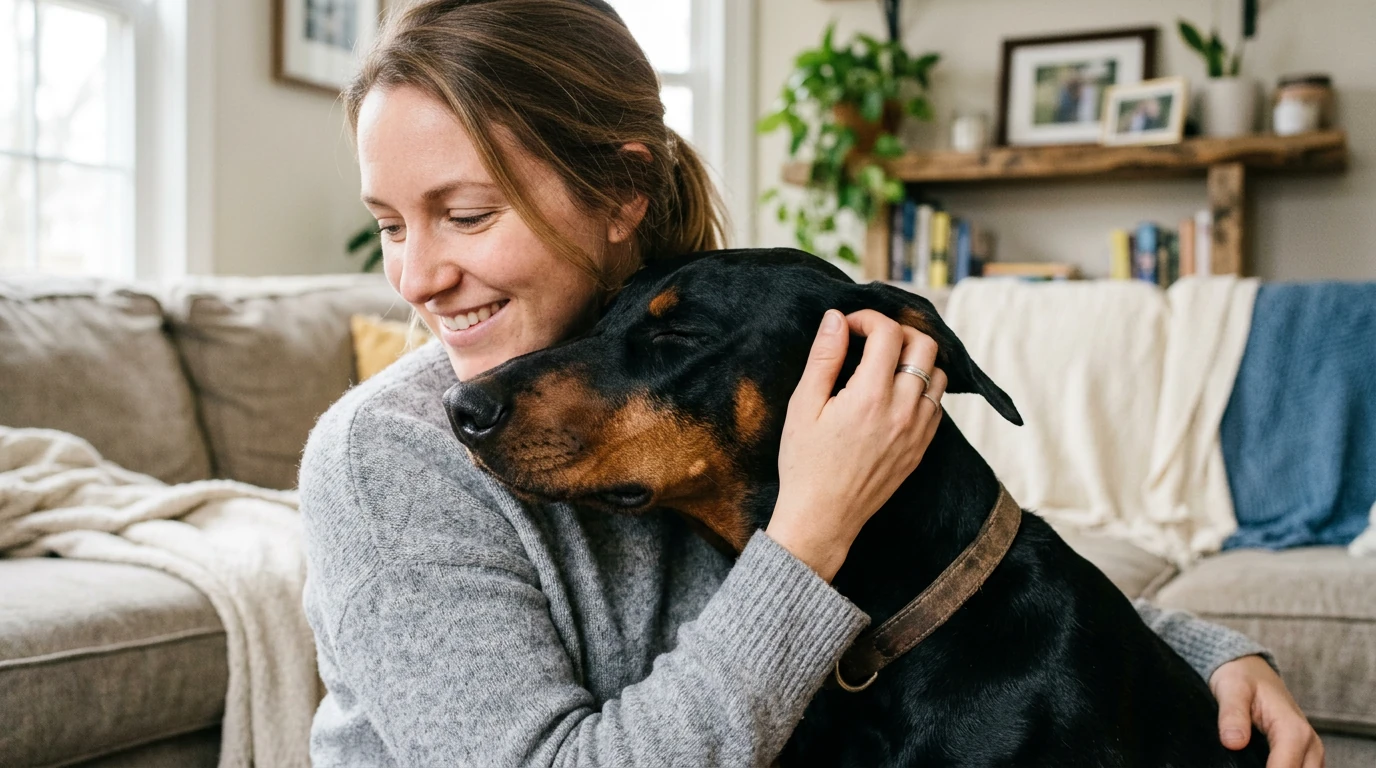
So, do dobermans attack their owners? In virtually all documented cases of owner-directed aggression across any breed, the root cause is not sudden genetic madness. Instead, it stems from severe neglect, physical abuse, undiagnosed medical pain (such as neurological issues or severe arthritis), or a complete lack of early socialization. A healthy, loved Doberman is intensely devoted to their family and is far more likely to lean against your legs for support than to show aggression toward you.
What Drives a Doberman to Show Aggression?
If the breed isn’t inherently vicious, why do we still see reports of a doberman attack or read about a doberman dog dangerous incident? Aggression in Dobermans is rarely random. It is almost always a predictable response to specific environmental triggers:
1. Lack of Socialization
Dobermans possess a natural, genetic instinct to protect their home and family. This is one reason the broader Doberman Pinscher Temperament, Care, and Ownership Guide is useful before making judgments about the breed as a whole. If a puppy is not thoroughly socialized with different types of people, environments, sounds, and other animals during their critical development window (up to 16 weeks), that protective instinct can easily warp into fear-based aggression. A fearful Doberman is a doberman aggressive dog because they perceive benign novelties as active threats.
2. Fear and Resource Guarding
Because they form such tight bonds with their owners, some Dobermans can develop extreme resource-guarding behaviors—protecting their food, their toys, or even their favorite human. Without clear structural boundaries, a Doberman may decide it is their job to police the household, leading to growling or snapping when someone gets too close to their "assets."
3. Neglect and Lack of Mental Stimulation
These are not backyard dogs that can be left alone on a chain. Dobermans are exceptionally intelligent (often ranked among the top 5 smartest dog breeds). When a highly active, highly intelligent working dog is deprived of exercise and mental stimulation, their frustration builds. This pent-up energy can manifest as destructive behavior, hyper-reactivity, and barrier frustration, which can easily boil over into redirected aggression.
How to Ensure Your Doberman is Safe and Stable
At that point it helps to continue with Do Dobermans Bark a Lot? What Usually Triggers the Noise or Doberman Training Basics: How to Build Focus, Manners, and Confidence, since real-world safety depends on routine, stimulation, and training as much as temperament.
Preventing a doberman pinscher dangerous scenario comes down to proactive, responsible ownership. If you are considering bringing one of these majestic dogs into your home, you must be prepared to commit to their unique developmental needs.
Early and Ongoing Socialization
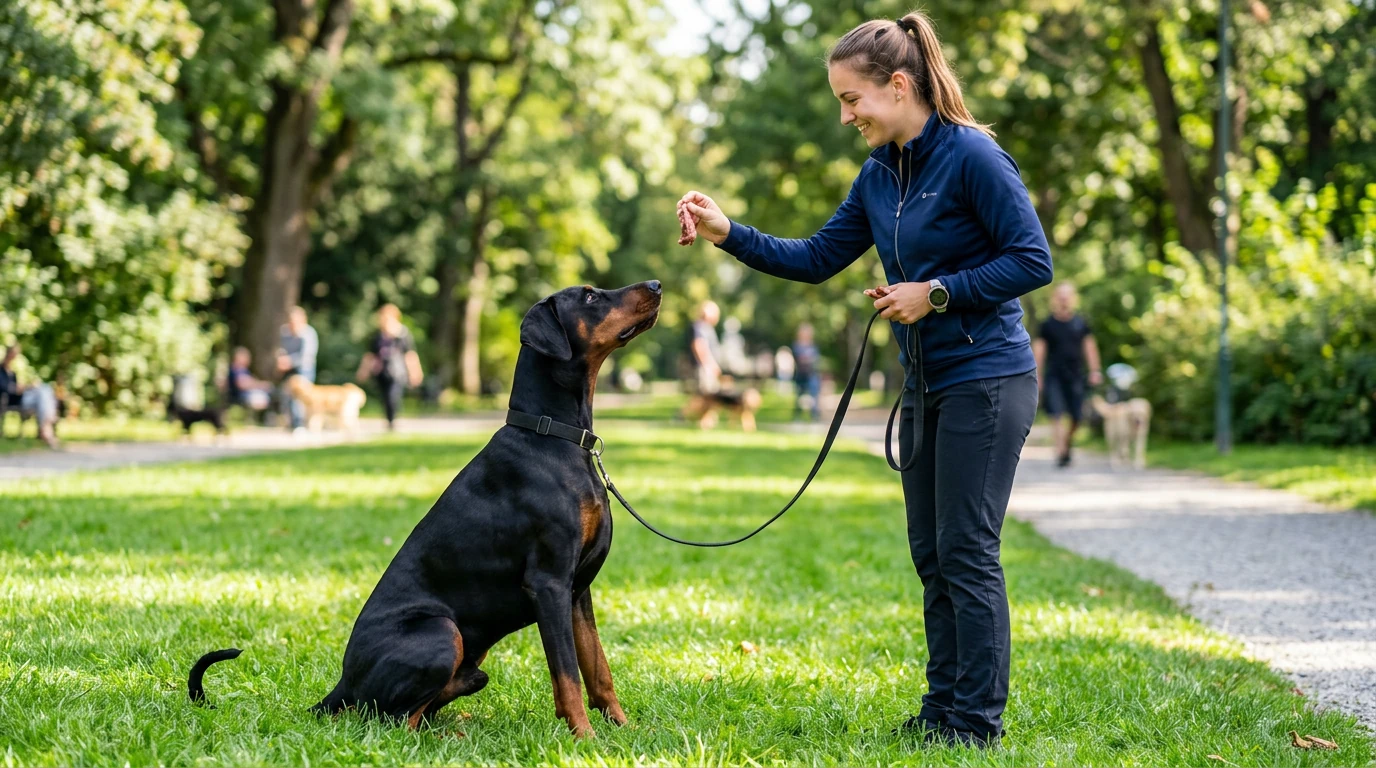
From the moment your Doberman puppy is fully vaccinated, expose them to the world in a positive, controlled manner. Let them see people of all shapes, sizes, and outfits. Walk them past busy parks, let them hear traffic, and introduce them to calm, friendly adult dogs. The goal is not to make them love everyone they meet, but rather to teach them to remain calm, neutral, and unfazed by the world around them.
Positive Reinforcement Training
Because Dobermans are highly sensitive, harsh training methods (such as heavy physical corrections) can backfire terribly. A Doberman trained through fear is far more likely to eventually bite out of self-defense. Focus instead on positive reinforcement, clear boundaries, and cooperative training. They want to work with you, not submit to you out of fear.
Mental and Physical Outlets
A tired Doberman is a good Doberman. Plan for at least 1 to 2 hours of physical exercise daily, combined with interactive games, puzzle feeders, and obedience training. Canine sports like Agility, Nosework, or Dock Diving are incredible outlets for their intense working drive.
The Verdict: Are Dobermans Dangerous?
So, are doberman pinschers dangerous?
The most accurate answer is: Only in the hands of an irresponsible or uneducated owner.
A Doberman is a powerful, highly sensitive working dog with a built-in protective drive. If they are neglected, abused, unsocialized, or intentionally trained to be vicious, their size and strength make them a formidable hazard.
However, when raised by an owner who understands their need for structured leadership, early socialization, and daily mental stimulation, the Doberman Pinscher is one of the most loving, reliable, and protective family companions in the canine world. Far from being "mean dogs," they are devoted protectors who will gladly spend their lives ensuring their human family is safe, loved, and never alone.