When people first encounter a Doberman, they are often struck by the breed’s sleek, athletic build and regal posture. But behind that imposing silhouette is one of the most frequently asked questions by prospective owners: are Dobermans friendly?
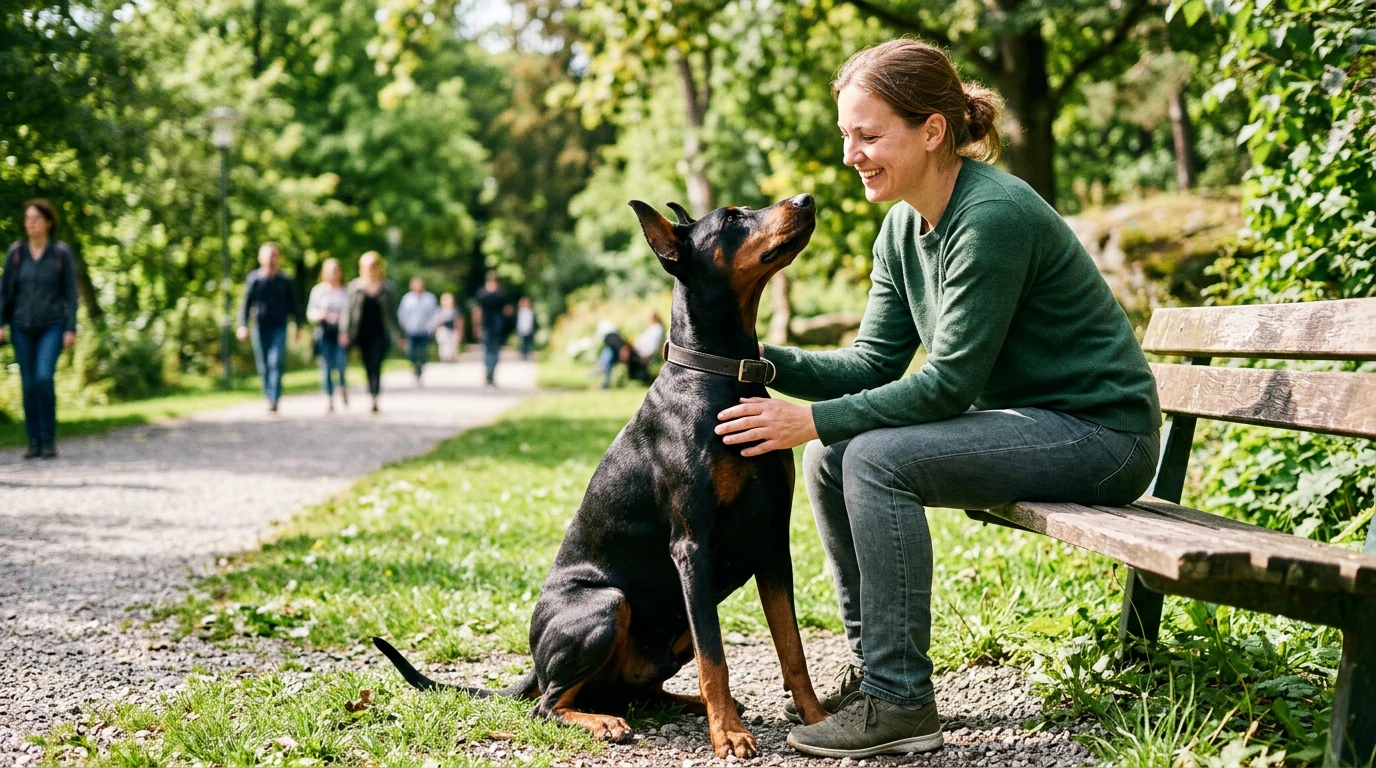
The short answer is a resounding yes. Dobermans are famously known as "Velcro dogs" because they form intensely close, affectionate bonds with their human families. However, that inherent friendliness, loyalty, and affectionate nature do not simply happen by magic. They are unlocked, shaped, and polished through consistent, positive doberman training.
Without proper guidance, a Doberman's high intelligence and protective instincts can morph into anxiety or reactivity. With the right foundation, however, they blossom into self-assured, gentle, and brilliantly well-mannered companions. Whether you are bringing home an eight-week-old puppy or adopting an adult rescue, understanding dog training for Dobermans is the most important step in your journey together.
In this guide, we will explore the fundamentals of doberman pinscher training, address whether they are truly easy to train, and break down the actionable steps you need to build focus, manners, and lifelong confidence in your dog.
This narrower guide makes more sense alongside the broader Doberman Pinscher Temperament, Care, and Ownership Guide, which frames how this topic fits into the bigger ownership picture.
Are Dobermans Easy to Train or Hard to Train?
Before diving into the techniques of how to train a doberman dog, it is important to understand how their minds work. If you find yourself asking, is Doberman easy to train?, the answer lies in understanding their unique blend of high intelligence and emotional sensitivity.
Ranked among the smartest dog breeds in the world, Dobermans possess a remarkable capacity for learning. They process commands quickly, have excellent memories, and genuinely want to work alongside their owners. In this regard, they are incredibly easy to train. You will rarely have to repeat a new concept endlessly before a Doberman understands what you are asking of them.
So, why do some people ask, are Dobermans hard to train?
The difficulty with Dobermans does not come from a lack of understanding; it comes from their tendency to become bored and their profound sensitivity. If a training session is too repetitive, a Doberman will simply lose interest and look for something more stimulating to do. Furthermore, because they are deeply attuned to their owner’s emotions, harsh corrections or a frustrated tone of voice will cause a Doberman to shut down. They require a confident, calm leader who uses positive reinforcement. If you are inconsistent, they are smart enough to exploit the loopholes in your rules.
To dive deeper into the breed's overarching personality traits and how they affect daily life, our Doberman Pinscher Temperament Care and Ownership Guide offers a comprehensive look at what makes these dogs tick.
Doberman Puppy Training Age: When Should You Start?
A common misconception is that puppies need to be several months old before they can learn. When it comes to the ideal doberman puppy training age, the rule is simple: training begins the moment your puppy steps paw into your home.
By eight weeks of age, a Doberman puppy is a little sponge, eager to soak up information about their new environment. While you won't be teaching complex agility courses at this age, you are laying the critical groundwork for their future behavior.
The First 16 Weeks: The Critical Socialization Window
If you want to ensure your Doberman grows up to be a friendly, approachable adult, the window between 8 and 16 weeks is the most important period of their life. This is the socialization phase.
How to train a doberman pinscher puppy during this phase involves safely exposing them to:
- New People: Men, women, children, people wearing hats or sunglasses, and people carrying umbrellas.
- Other Animals: Fully vaccinated, well-mannered adult dogs and, if possible, dog-savvy cats.
- Environments: Car rides, pet-friendly stores, veterinary clinics, and different walking surfaces (grass, gravel, tile).
- Sounds: Vacuum cleaners, doorbells, sirens, and traffic noises (played at a low volume initially).
The goal of socialization is not to force your puppy to interact with everything, but to teach them that the world is a safe, non-threatening place. Positive experiences now prevent fear-based reactivity later.
Doberman Training Timeline
| Age Range | Primary Training Focus | Key Milestones |
|---|---|---|
| 8 - 12 Weeks | Socialization, Potty Training, Crate Training | Recognizing their name, sleeping through the night in a crate, basic "sit" and "look at me" commands. |
| 3 - 6 Months | Basic Obedience, Leash Manners, Impulse Control | Walking without pulling heavily, "stay," "leave it," and structured play without nipping. |
| 6 - 12 Months | Proofing Commands, Recall, Teenage Phase Management | Reliable recall in enclosed spaces, holding commands around distractions, managing adolescent stubbornness. |
| 1+ Years | Advanced Obedience, Canine Sports, Public Access | Off-leash reliability (where safe/legal), advanced tricks, high-level impulse control. |
How to Train a Doberman Dog: 4 Core Pillars
Successful doberman pinscher dog training requires a structured approach. Focus on these four core pillars to build a well-rounded companion.
1. Harnessing Positive Reinforcement
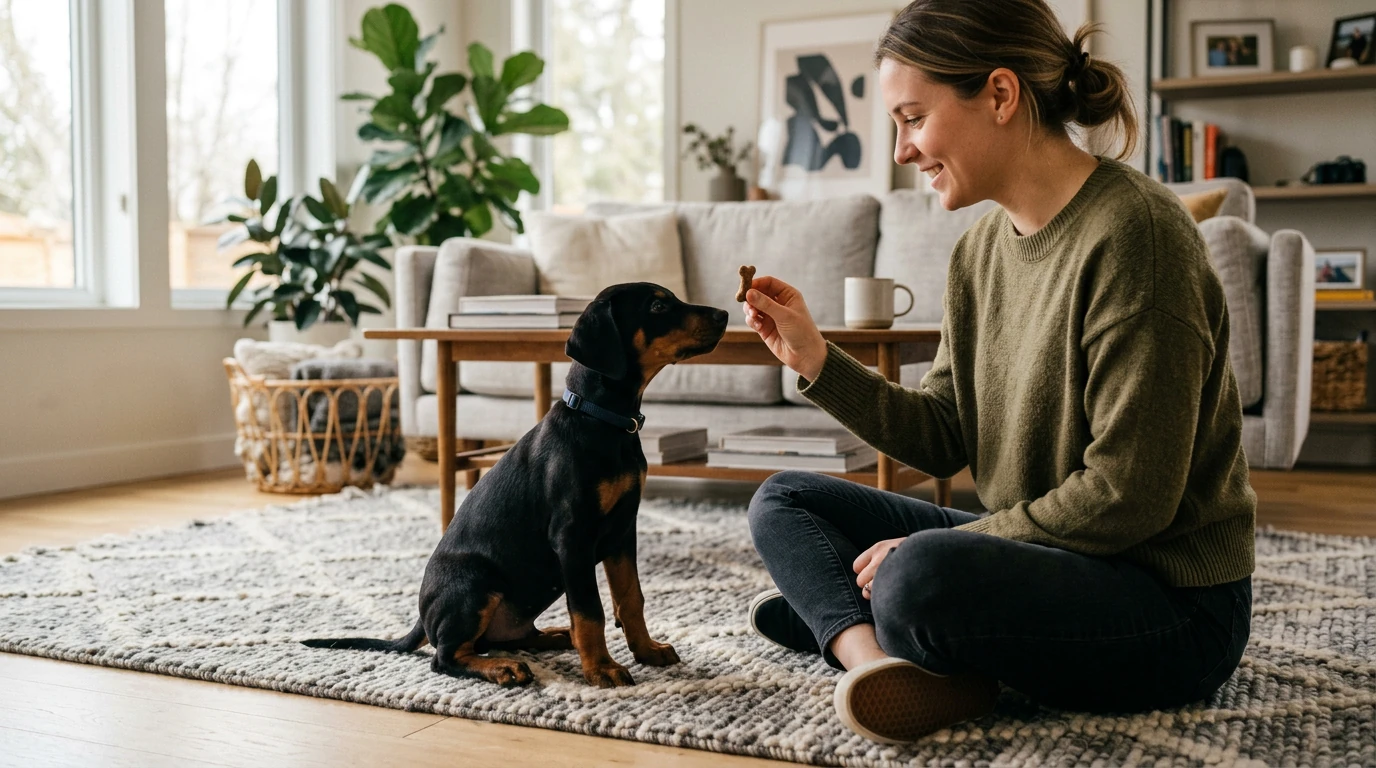
Dobermans thrive on praise and rewards. Because they are a working breed, they view training as their "job," and they want to be paid for it. Use high-value treats, enthusiastic verbal praise, and brief games of tug to reward good behavior.
If your Doberman makes a mistake, avoid physical punishment or yelling. Instead, redirect them to the correct behavior. For example, if they jump up to greet you, turn your back and ignore them until all four paws are on the floor. The moment they settle, shower them with affection. They will quickly learn that calm behavior earns them the attention they crave.
2. Building Engagement and Focus
Before you can teach a Doberman anything, you must have their attention. Teach the "Look" or "Watch me" command early on. Hold a treat near your face, wait for your Doberman to make eye contact, say "Yes!" or click your training clicker, and give them the treat.
In high-distraction environments—like a park with squirrels or other dogs—this command is a lifesaver. It teaches your Doberman to check in with you for direction rather than reacting to their impulses.
3. Leash Manners and Equipment
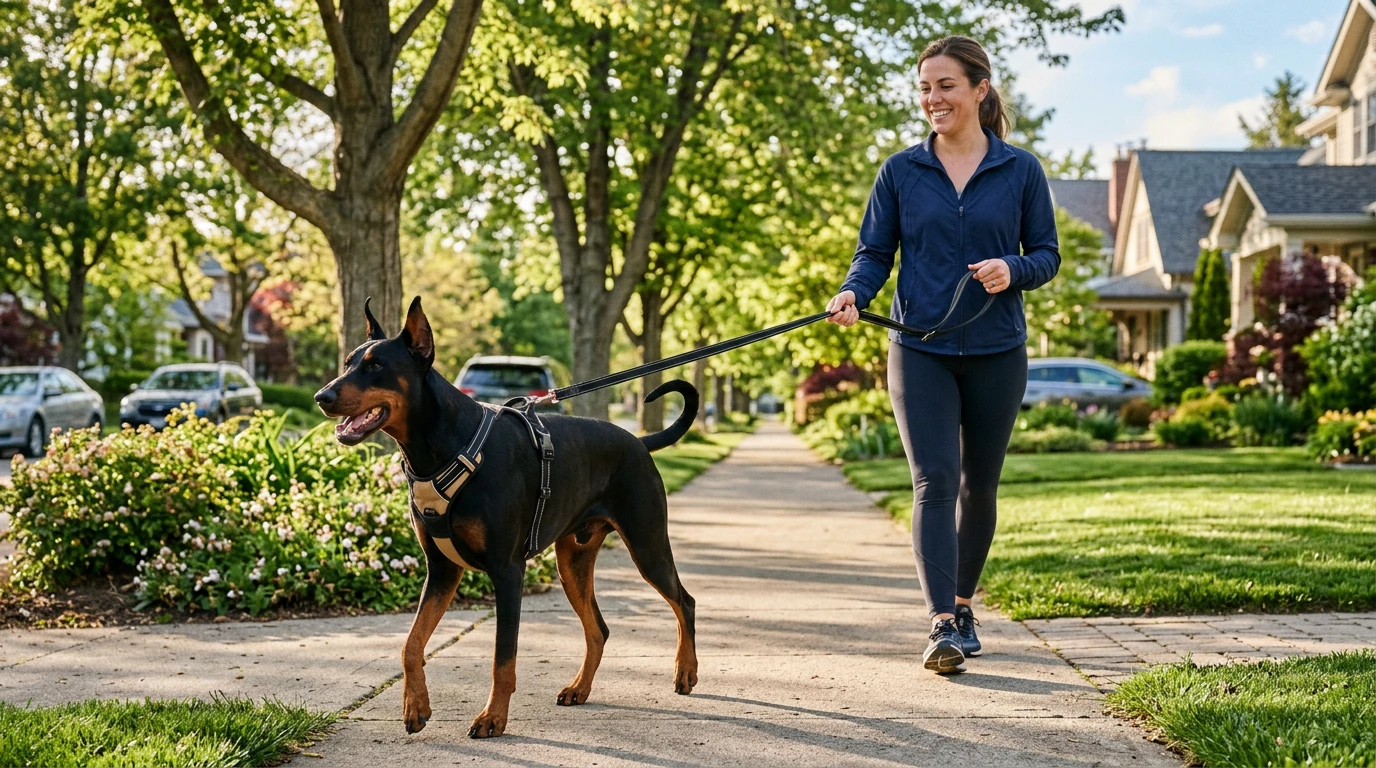
An adult Doberman is a large, powerful dog. If they learn to pull on the leash as a puppy, they will drag you down the street as an adult. Loose-leash walking is a non-negotiable aspect of doberman training.
Start by outfitting your Doberman in comfortable, well-fitting gear. A high-quality harness or a wide, padded collar (like those designed for comfort and durability by NookPaws) ensures your dog isn't distracted by chafing or pinching. When your dog pulls, stop walking entirely. Become a tree. Only resume walking when the leash has slack. It requires immense patience, but your Doberman will eventually realize that pulling stops the walk, while a loose leash allows them to move forward.
4. Teaching Impulse Control
Dobermans have a strong prey drive and abundant energy. Teaching impulse control helps them manage their own excitement. The "Leave it" and "Wait" commands are vital.
Practice "Wait" at doorways, before meals, and before getting out of the car. This prevents door-dashing and teaches your dog that looking to you for permission is the key to getting what they want.
The Crucial Link Between Exercise and Training
The overlap is easiest to see when you read How Much Exercise Does a Doberman Need? Energy, Routine, and Real-Life Balance next, because exercise management often explains why training either settles a Doberman down or leaves them even more frustrated.
One of the biggest mistakes owners make in doberman pinscher training is trying to teach a dog that has pent-up energy. Dobermans are elite athletes. If their physical needs are not met, their minds will be too scattered to focus on obedience.
A tired Doberman is a trainable Doberman. If you find your dog is unusually stubborn, hyperactive, or destructive, evaluate their daily routine. Are they getting enough rigorous physical activity? A quick walk around the block is rarely sufficient for this breed. For a detailed breakdown of how to structure your dog's physical routine, be sure to read our guide on How Much Exercise Does a Doberman Need? Energy, Routine, and Real-Life Balance. Integrating proper exercise into your daily life will make your training sessions exponentially more successful.
Advanced Training and Mental Stimulation
Once you have mastered basic obedience, you might wonder what comes next. Because Dobermans are so intelligent, basic training is often not enough to tire out their brains. Incorporating advanced training and mental stimulation keeps them sharp and prevents behavioral issues rooted in boredom.
Brain Games and Puzzles:
Ditch the traditional food bowl. Feed your Doberman their meals using puzzle toys, snuffle mats, or treat-dispensing balls. This forces them to use their natural foraging instincts and problem-solving skills to earn their food.
Scent Work:
Dobermans have incredible noses. Teach your dog to play "find it" by hiding their favorite toys or treats around the house. Start in plain sight, and gradually increase the difficulty by hiding items in other rooms or under furniture. This is an incredibly taxing mental exercise that will leave your Doberman happily exhausted.
Canine Sports:
If you want to take your doberman training to the next level, consider enrolling in a local canine sport. Dobermans excel at agility, obedience competitions, tracking, and rally. These sports not only provide a physical outlet but also deepen the bond of communication between you and your dog.
Common Doberman Training Mistakes to Avoid
Even with the best intentions, it is easy to fall into training traps. Keep these common pitfalls in mind:
- Inconsistency: If you don't allow your Doberman on the couch on Monday, but you let them up for cuddles on Tuesday, you are confusing them. Dogs need black-and-white rules to succeed. Ensure everyone in your household enforces the same boundaries.
- Repeating Commands: If you say "Sit... Sit... SIT!" and your dog finally sits on the third try, you have accidentally taught them that "Sit-Sit-Sit" is the command. Say the command once. If they do not comply, gently guide them into the position or take a step back and try again when you have their full focus.
- Training When Frustrated: Dobermans will sense your anger. If you are having a bad day or losing your temper during a session, simply stop. End on a simple, positive note (like asking for a "paw" and giving a treat) and try again later.
The Lifelong Reward of a Well-Trained Doberman
Ultimately, training a Doberman is not a task you cross off a to-do list; it is a lifelong conversation between you and your dog. Are Dobermans friendly? Yes—incredibly so. But it is through dedicated doberman training that their friendliness is channeled into calm confidence.
By starting early, utilizing positive reinforcement, maintaining clear boundaries, and fulfilling their need for mental and physical exertion, you unlock the true potential of the breed. The effort you put into training your Doberman in their early years will reward you with a decade or more of unwavering loyalty, breathtaking focus, and a gentle, affectionate companion who is a joy to have by your side.